

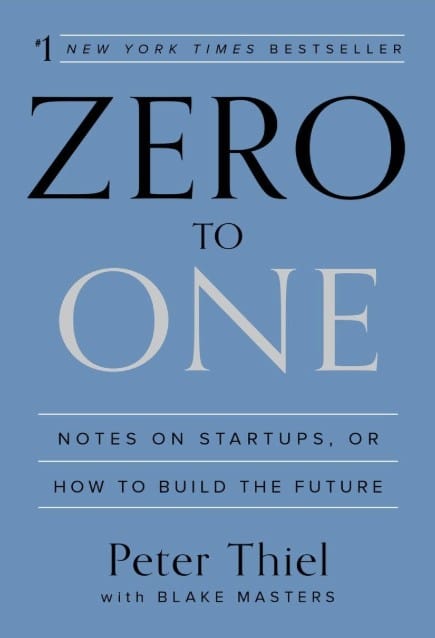
Thiel distinguishes between horizontal progress, which copies what already works, and vertical progress, which creates something entirely new. He argues that real breakthroughs come from going “zero to one,” not from small, incremental improvements. This requires contrarian thinking and the willingness to pursue ideas that most people overlook.
The dot com crash taught founders the wrong lessons. Many became overly cautious, focused on copying competitors, or avoided bold visions. Thiel warns that overreacting to past failures can suppress innovation. Progress, in his view, needs disciplined risk taking rather than fear driven retreat.
Lasting businesses succeed because they escape intense competition and gain monopoly like power in their niches. Thiel reframes monopolies as the natural result of creating something uniquely valuable. Constantly fighting rivals dilutes focus and reduces profitability, while differentiation creates clarity and leverage.
Competition is widely praised in culture, but Thiel argues that it encourages imitation and short term thinking. Rivalries distract leaders from building long term value. The healthiest companies put their energy into relatively uncontested spaces where they can define the rules instead of reacting to others.
Thiel argues that the goal is not simply to be first, but to become the company that defines and keeps a category. He calls this a last mover advantage. Durable monopolies tend to share four traits: proprietary technology, network effects, economies of scale, and a strong brand. Great companies usually start by dominating a small market, then expand deliberately.
Thiel rejects the idea that success is mainly a matter of luck. He argues that clear vision, deliberate planning, and focused effort matter more than chance. He criticizes the cultural dependence on lotteries, speculation, and random career moves, and claims that intentional design produces more reliable results.
Venture returns follow a power law pattern where a small number of companies produce most of the gains. Entrepreneurs and investors need to concentrate their energy on the single opportunity with the highest potential, rather than spreading themselves thin. The same logic applies to wealth building, where a few key decisions shape most long term outcomes.
Breakthrough companies are built on secrets, which Thiel defines as important truths that most people have not noticed or do not agree with. He insists that the world is still full of such secrets in science, business, and society. Founders should ask themselves what important truth very few people share with them, then build around that insight.
The earliest decisions in a company have a disproportionate impact. Choosing co founders, dividing equity, setting cultural norms, and defining roles at the beginning creates or prevents future dysfunction. Foundation work is quiet and unglamorous, but it is extremely difficult and costly to repair later.
Thiel describes the ideal startup culture as a tight knit group united by mission, trust, and shared intensity. He compares this to a kind of mafia that is bound together by loyalty and purpose. Hiring should focus on people who are committed to the vision, not on those who are simply looking for a generic career step. A strong culture makes the company more resilient.
A strong product is not enough by itself. Every company needs a distribution strategy, whether that involves direct sales, partnerships, viral growth, or other channels. Thiel argues that neglecting distribution is one of the most common reasons that otherwise promising startups fail.
Thiel rejects the idea that technology will simply replace humans. He believes the most powerful systems combine human judgment with machine capability. Technology should amplify what people do well and cover areas where humans are weak, rather than trying to remove people from the loop entirely.
Zero to One is Thiel’s argument that real progress comes from creating something genuinely new instead of competing to do the same thing slightly better. He calls this leap from nothing to something “zero to one.” Horizontal progress, which spreads or copies existing ideas, is useful but limited. Vertical progress, which introduces new technologies and new ways of doing things, is what truly changes the world. Thiel urges founders and builders to ask what valuable company nobody is building yet, rather than simply asking how to gain a small share of an existing market.
A central claim of the book is that the best companies function like monopolies in the positive sense. They dominate a clearly defined niche because they offer something so different and so useful that no close substitute exists. In this view, monopoly profits are the reward for innovation, not proof of abuse. Thiel argues that competition often traps people in imitation, short time horizons, and constant comparison. The companies that matter most are the ones that escape crowded markets by uncovering secrets, building proprietary advantages, and starting small before expanding outward.
Thiel also pushes back against the idea that success is largely random. He argues that strong founders act as “definite optimists,” people who believe the future can be shaped by deliberate action rather than by luck alone. They design their companies carefully from the foundation, choose co-founders and early hires with intention, and treat culture, distribution, and strategy as core elements rather than afterthoughts. In his view, a few choices and a few opportunities drive most of the long term outcomes, so spreading bets too widely is a mistake.
Throughout the book, Thiel ties these ideas back to a simple expectation: meaningful work should move the world from zero to one, not from one to many. That requires independent thinking, the willingness to pursue unpopular truths, and the discipline to build enduring advantages instead of chasing noise. Whether someone is starting a company, investing, or choosing where to work, Thiel’s framework encourages them to seek out places where they can create something truly distinctive rather than just joining another race in an already crowded lane.