

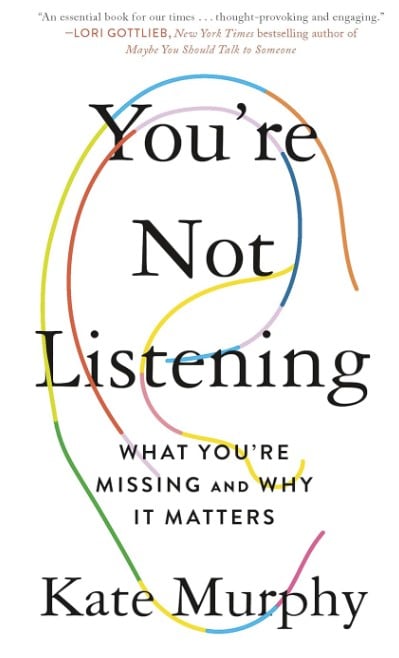
“You’re Not Listening” explains that truly paying attention to others has become rare, and that loss is making people lonelier and more disconnected. Kate Murphy draws a sharp line between hearing and listening: hearing is passive, listening is active. It means focusing on the other person’s words, tone, and body language while putting your own agenda on hold. When no one does that for us, we feel unseen, which is why so many people turn to therapists, pets, or social media for a sense of being heard and still feel empty.
Murphy shows how assumptions, distraction, and ego quietly sabotage listening. Our brains think faster than people can speak, so we use the extra mental bandwidth to judge, plan our reply, or mentally wander instead of staying present. We also file people into mental categories and then listen only for what proves we are right. On top of that, we often respond with “shift responses” that pull the conversation back to ourselves instead of “support responses” that invite the other person to go deeper. All of this makes conversation feel like parallel monologues rather than real connection.
The book argues that good listening grows from curiosity and comfort with ambiguity. Great listeners treat everyone as interesting and ask open, supportive questions that help the speaker explore their own thoughts. They are especially intentional when listening to opposing views. Rather than listening to attack, they listen to understand, holding space for the possibility that more than one perspective can contain truth. This does not mean giving up your convictions. It means taking others seriously enough to hear them accurately, which lowers defensiveness and allows real dialogue.
Murphy also tackles modern obstacles like constant phone use, multitasking, and the urge to fill every silence. Devices fracture attention, sped up media makes us impatient with normal speech, and jumping in too quickly can shut down what someone was about to say. She emphasizes that listening is effortful and you cannot do it deeply all the time, but choosing when to truly listen is one of the most powerful relational decisions you can make. In the end, the book presents listening as a deliberate act of respect: it is how you show people they matter, how you learn, and how you build stronger, more meaningful relationships.