

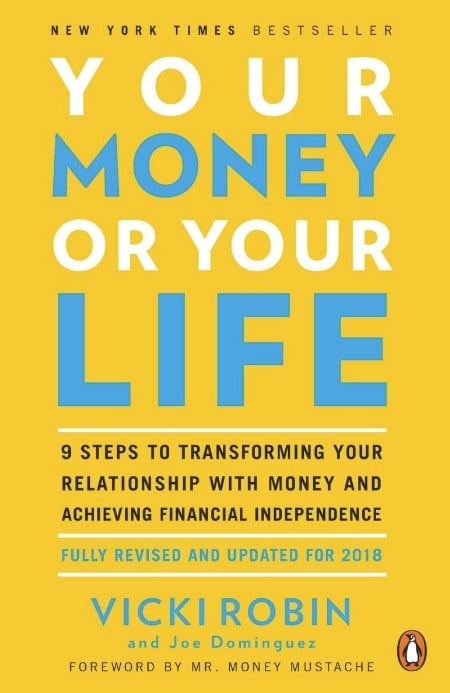
The authors open by showing how most people live on autopilot: working long hours, spending to relieve stress, and never questioning whether the trade is worth it. This cycle erodes fulfillment because money is disconnected from life energy. They argue that true financial independence begins when individuals stop measuring success by consumption and start evaluating whether their money habits align with their values and purpose.
Money is reframed as a simple exchange of life energy, not a symbol of status or identity. Every dollar represents time that cannot be reclaimed. By redefining money this way, the book encourages conscious decision-making rather than consumer-driven impulses. Readers are pushed to detach from cultural stories about wealth and to treat money as a tool for freedom.
The authors instruct readers to track every dollar that enters or leaves their lives for a full month. This creates an honest picture of spending habits and reveals patterns that usually go unnoticed. As awareness grows, spending naturally becomes intentional. The goal is not budgeting but clarity, once individuals see where money goes, they can make choices that support their values.
This chapter introduces the fulfillment curve, showing that satisfaction rises with spending until it reaches enough, then declines as purchases become clutter or stress. Understanding enough frees individuals from endless striving and lifestyle creep. The authors guide readers to identify which expenses bring real satisfaction and which do not.
A visual wall chart of monthly income and expenses helps readers see progress over time. The chart makes the financial journey tangible and reinforces behavioral change. As fulfillment-guided decisions reduce unnecessary spending, the gap between income and expenses grows. Momentum builds because individuals can literally see their transformation.
The authors challenge the cultural assumption that a meaningful life requires high spending. They show that many people achieve abundance and purpose through simplicity and intentional choices. Reducing expenses is not about deprivation but liberation: less overhead unlocks more freedom, flexibility, and time. The chapter reframes the American Dream as autonomy, not accumulation.
Readers calculate their real hourly wage by including hidden costs of work such as commuting, recovery time, and job-related spending. This often reveals that income is far lower than assumed. With a clearer sense of the true cost of earning money, purchases become measurable in hours of life rather than dollars. This shift creates discipline and intentionality in all spending decisions.
The crossover point occurs when income from invested savings covers monthly expenses. This marks financial independence. The authors emphasize that reaching this point does not mean abandoning work but gaining choice, individuals can pursue work that aligns with meaning rather than necessity. The crossover point becomes the central target for long-term financial clarity.
The final chapter shifts from money mechanics to purpose. Once financial independence is achieved, many rediscover creativity, community, and service. The book argues that money is only one piece of a meaningful life; the deeper reward is reclaimed time and autonomy. Individuals can live with alignment, choosing activities that reflect their values rather than financial pressure.
Your Money or Your Life is a program designed to transform how people understand, earn, and use money by reconnecting it to the idea of life energy. The authors argue that most people move through life trapped in a cycle of working and spending without ever questioning whether the trade is worth it. Money becomes a stand-in for identity, security, or comfort, yet often brings stress and confusion. The book begins by challenging this old financial roadmap and reframes money as something individuals exchange their finite time for, not a symbol of success. This shift lays the foundation for a more intentional financial life.
The nine-step program centers on awareness. By calculating real hourly wage, tracking every dollar, and examining whether spending aligns with values, individuals gain clarity about what truly brings satisfaction. The book rejects traditional budgeting and instead focuses on simple practices that help people see where their money goes and whether those choices reflect what they care about. Through monthly reviews and visual tracking, readers begin to reduce unnecessary spending naturally, guided by fulfillment rather than pressure or deprivation. Over time, these habits create a growing gap between income and expenses, which becomes savings.
As savings accumulate, the book introduces the crossover point — the moment when investment income meets or exceeds monthly expenses. This marks financial independence. The authors stress that independence is not about extreme wealth but about having enough to remove fear and regain choice. By lowering expenses and valuing each hour of life energy, individuals can reach this point far sooner than expected. This financial stability brings peace of mind and allows for deeper alignment between time, purpose, and work.
The book concludes by showing that money is not the goal; meaning is. Once freed from financial pressure, many discover that fulfillment comes from relationships, contribution, creativity, and service. Financial independence is simply the structure that enables those pursuits. Ultimately, Your Money or Your Life is less about accumulating wealth and more about reclaiming control over one’s time, making conscious choices, and designing a life rooted in purpose rather than consumption.