

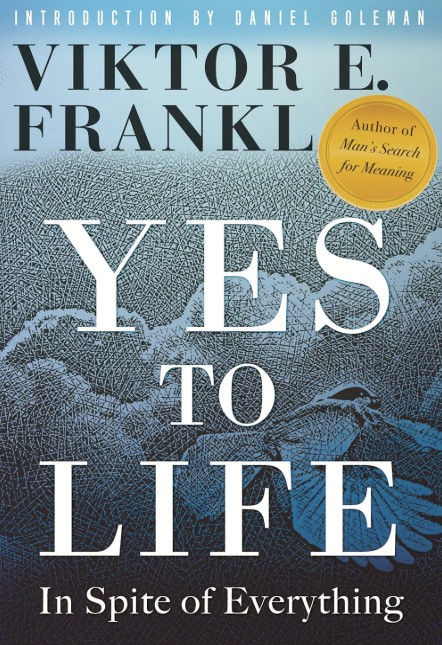
Goleman presents Frankl’s lectures as a rare window into the mind of someone who had survived the worst of humanity and still chose to affirm life. He notes that Frankl’s central claim, that meaning is the primary human motivation, anticipated modern psychology’s focus on purpose and resilience. Goleman explains that Frankl delivered these lectures less than a year after liberation, showing remarkable clarity and compassion. The introduction positions the book as a guide for anyone struggling with despair or confusion, emphasizing that meaning creates steadiness during uncertainty.
Frankl argues that life always holds meaning, even under unimaginable suffering. He explains that suffering only becomes destructive when it loses purpose. The one freedom that cannot be taken is the freedom to choose how we respond to circumstances. Meaning is discovered through responsibility to work, to people we love, or to ideals that matter. Frankl’s account illustrates that we do not control everything that happens, but we always control our attitude and our response. This is the foundation of psychological and spiritual resilience.
Frankl expands on the idea that life constantly presents us with questions, and we answer through choices. He identifies three avenues to meaning: through creative action, through experiences such as love and beauty, and through the attitude we adopt toward unavoidable suffering. He rejects the idea that life must supply answers to us; instead, we supply answers to life. Freedom requires responsibility, and responsibility gives freedom direction. Meaning shifts across moments, so our task is to respond faithfully to the demands of each moment as it comes.
Frankl closes by examining nihilism and hopelessness, arguing that despair is often the result of failing to imagine a meaningful future. He explains that human beings rise above suffering by transcending themselves and focusing on something or someone beyond their own pain. The decisive test of character is how a person acts when comfort is gone and only responsibility remains. Meaning is not a theory; it is demonstrated in how one chooses to live. Frankl concludes that life can be affirmed even in the darkest hours because meaning is possible in every circumstance.
Yes to Life is Viktor Frankl’s affirmation that meaning is available in every moment of existence, even when life appears unbearable. Written just months after surviving the concentration camps, the book reflects a worldview forged in extremity yet anchored in hope. Frankl argues that life never stops offering opportunities for meaning, because meaning is not tied to comfort or circumstance. It emerges in responsibility, in how we respond to the demands of each moment, and in the freedom to choose one’s attitude even when everything else has been taken away.
Frankl explains that meaning comes through three primary pathways: through creating work or action, through experiencing love or beauty, and through the attitude we adopt toward suffering. When one path is blocked, the others remain available. Even when a person can no longer act or change their situation, they can still choose a courageous and dignified posture toward hardship. This insight reframes suffering not as a negation of meaning but as a potential arena for meaning, provided it cannot be avoided and is met with responsibility.
The book highlights that life is not something we question in the abstract. Instead, life questions us, and our task is to answer through choices, not through words. Meaning is specific to each person and to each moment. What is required of one individual may not be required of another, and the demands of life shift constantly. This teaches that responsibility is both inescapable and empowering. Each choice shapes the world and preserves something real in existence, even if the moment passes.
Across the lectures, Frankl’s message remains steady: to say yes to life is always possible. Human beings retain inner freedom even in the face of overwhelming suffering, and this freedom allows them to transform their experience into purpose. The book is ultimately a call to live consciously, with clarity and duty, recognizing that every moment carries the possibility of meaning. By accepting this responsibility, individuals gain resilience, dignity, and a deeper affirmation of life itself.