

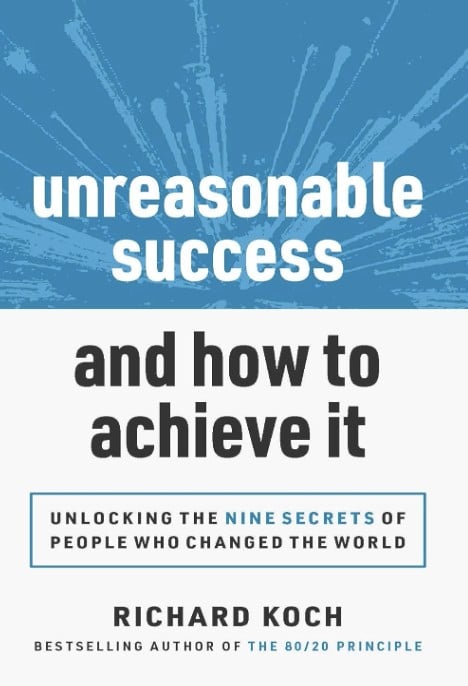
Richard Koch argues that the people who achieve “unreasonable success” do not simply work harder or have more talent. They think and position themselves differently. The book studies figures like Steve Jobs, Marie Curie, Nelson Mandela, and Jeff Bezos to identify nine recurring “landmarks” on their paths to outsized impact. At the foundation is self-belief, a deep conviction that one’s life is meant to matter, paired with what Koch calls Olympian expectations: goals that look absurdly high to everyone else. These individuals do not aim for incremental improvement. They expect to reshape industries, politics, or culture, and they slowly grow into those expectations.
Koch explains that this mindset is almost always forged through transforming experiences. These are intense periods of challenge, responsibility, or exposure to new worlds that permanently raise a person’s sense of what is possible. From that new vantage point, they eventually focus on a single breakthrough achievement, the one project or mission that becomes their defining contribution. Crucially, they do not follow the standard career ladder. They “make their own trail” by rejecting conventional wisdom, combining ideas in unusual ways, and moving into spaces where competition is thin and their strengths are uniquely valuable.
Unreasonably successful people rarely act alone. Each finds or builds a personal vehicle that multiplies their impact, such as a company, political movement, or platform. Inside that vehicle they develop unique intuition, a feel for their field that comes from immersion, experimentation, and constant pattern recognition. Setbacks are not treated as verdicts but as raw material. Koch shows how his subjects use failure to gain information, sharpen strategy, and fuel determination. Many even seem to draw extra energy from adversity, becoming more inventive and bold after reversals.
The final landmark is what Koch calls the ability to distort reality. These leaders hold such a vivid, confident picture of the future that they pull others into it. Their optimism and certainty alter what people around them believe is possible. Koch’s central claim is that this kind of success is less about perfect performance and more about positioning yourself with the right attitudes, experiences, and vehicles. Anyone may not become a Mandela or Bezos, but by cultivating deep self-belief, setting unreasonable expectations, seeking transformative challenges, and building a platform that fits your strengths, you can tilt luck in your favor and move much closer to your own version of unreasonable success.