

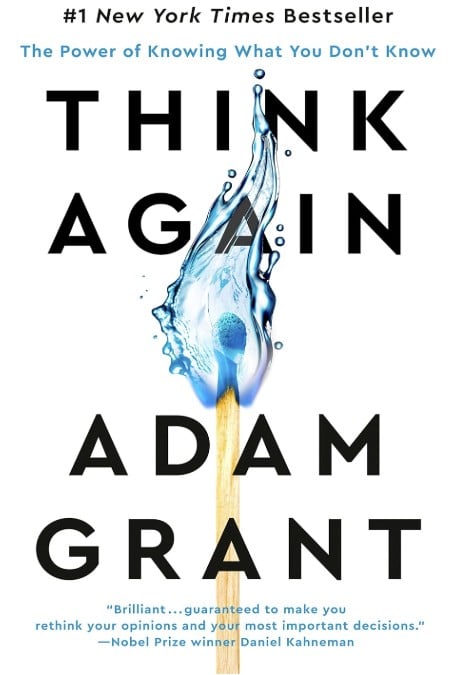
Grant explains that people often think in rigid mental modes: the preacher who protects beliefs, the prosecutor who attacks opposing views, and the politician who seeks approval. All three block learning. The alternative is the scientist mindset, which treats beliefs as hypotheses to test, not identities to defend. This mindset encourages curiosity, adaptability, and better long-term decision-making, especially in areas like wealth, leadership, and family legacy.
Overconfidence creates blind spots, while impostor syndrome prevents growth. Grant shows that both distort self-awareness. The goal is confident humility, the balance between trusting your abilities and recognizing limits. In any field, including financial planning, this balance leads to clearer thinking, better collaboration, and more sustainable strategies.
Being wrong is not a problem. Staying wrong is. Grant reframes error as useful feedback. People who enjoy discovering where their assumptions fail learn faster and make better choices. Families, leaders, and investors who embrace this mindset avoid doubling down on poor decisions and build resilience through continuous adjustment.
Healthy conflict sharpens thinking. Grant distinguishes between task conflict, which targets ideas, and relationship conflict, which targets identities. Groups that focus disagreements on issues innovate more effectively. In families and organizations, productive conflict strengthens decisions and supports shared values without damaging relationships.
Persuasion works best when people feel understood. Grant shows that listening, empathy, and thoughtful questions reduce defensiveness and create space for rethinking. Great persuaders help others examine their own reasoning rather than forcing new viewpoints on them. This approach applies to difficult financial conversations, generational planning, and leadership challenges.
Identity can trap people in rivalry and prevent growth. Grant uses real-world examples to show how strong group identities cause people to reject new information simply because it comes from the other side. Progress requires separating identity from opinion. When people detach ego from beliefs, they become more open to rethinking in money, career, and relationships.
Grant highlights strategies for navigating highly sensitive topics. Successful communicators avoid confrontation and instead use curiosity, nonjudgmental questions, and reflective listening. This gentle approach helps people update deeply held beliefs. It also mirrors how advisors, leaders, and families should handle conversations about risk, planning, and shared responsibility.
Emotional conversations require psychological safety. Grant explains that people speak more honestly when they feel respected and not judged. Separating emotion from interpretation allows difficult truths to surface. In families, this safety is essential for candid discussions about expectations, responsibility, and long-term goals.
Grant argues that best practices must evolve. Systems that cling to outdated knowledge fall behind. Healthy organizations and families encourage continuous learning and expect their playbook to change as new evidence appears. In finance, education, leadership, and legacy planning, adaptability ensures relevance and long-term success.
Traditions can comfort but also constrain. Grant encourages regularly evaluating habits and institutional routines. Some traditions strengthen culture, while others limit innovation. Successful families and teams preserve the rituals that matter and rethink the ones that no longer serve their goals.
Passion can motivate or mislead. Grant shows that people who become overly attached to one idea, strategy, or identity lose perspective. Effective thinkers pair passion with flexibility. In money, career, and leadership, this balance prevents overcommitment to failing ideas and supports better long-term judgment.
Think Again is a book about the skill of rethinking, which Grant argues is far more important than raw intelligence. Most people cling to their beliefs because it feels safe. They defend old ideas, avoid being wrong, and seek validation instead of truth. Grant shows that real progress happens when you treat your beliefs as temporary and your ego as separate from your opinions. Thinking like a scientist, testing assumptions, updating conclusions, and staying curious is the path to better decisions in work, relationships, and life.
Grant emphasizes the value of confident humility, the balance between trusting your abilities and acknowledging what you do not yet know. This mindset helps people avoid overconfidence and escape impostor syndrome. It also makes mistakes useful rather than shameful. When error becomes information, individuals learn faster, adapt more easily, and stay open to new possibilities. Grant highlights how healthy conflict and diverse viewpoints sharpen thinking when disagreements focus on ideas instead of identities.
Persuasion, Grant argues, begins with listening. People rarely change their minds when confronted aggressively. They rethink when they feel understood. Through empathy, questioning, and genuine curiosity, Grant shows how even deeply held beliefs about health, identity, or risk, can soften and shift. This approach strengthens communication across differences and builds trust in high-stakes conversations.
The book widens its lens to organizations and communities, showing how cultures that reward learning over certainty outperform those anchored in tradition. Schools, teams, and families thrive when they encourage experimentation, allow people to challenge one another safely, and expect their playbooks to evolve as new evidence appears. Grant’s message is clear: rethinking is not a corrective action but a lifelong discipline. The people and organizations that stay curious, adaptable, and humble are the ones that continue to grow and lead.