

Most millionaires live modestly and quietly build wealth through consistent saving. They focus on net worth, not income or status. The book introduces PAWs, who save and invest heavily, and UAWs, who spend too much and accumulate little. The chapter shows that real wealth is usually invisible.
Millionaires grow rich by living below their means. They budget, avoid lifestyle inflation, and direct extra money toward investments. Frugality is intentional, not deprivation, and it creates long-term freedom and financial security.
Millionaires manage their time with the same discipline they use with money. They plan, track spending, review goals, and avoid distractions. Their habits compound over time, while poor planners fall behind even if they earn more.
True millionaires rarely buy luxury cars. They choose reliable, cost-effective vehicles and keep them for years. People who chase status through cars tend to undermine their wealth. Millionaires spend for utility, not image.
Financial help to adult children often harms them. Regular gifts or subsidies create dependency and overspending. The children who build the most wealth are usually the ones who receive the least support and learn to live within their own means.
Families pass down values, not just money. Millionaires who raise financially capable children teach discipline, budgeting, and independence. Over-gifting weakens responsibility, while clear expectations strengthen long-term stability.
Many millionaires succeed by serving specific, often unglamorous markets. They build expertise, reinvest profits, and stay focused. Wealth often grows in steady, specialized fields rather than trendy or flashy industries.
Self-made millionaires choose careers with autonomy and financial upside. They work hard and save aggressively. Heirs who rely on parental money often struggle, while those who build independent careers replicate the discipline that created the family’s wealth in the first place.
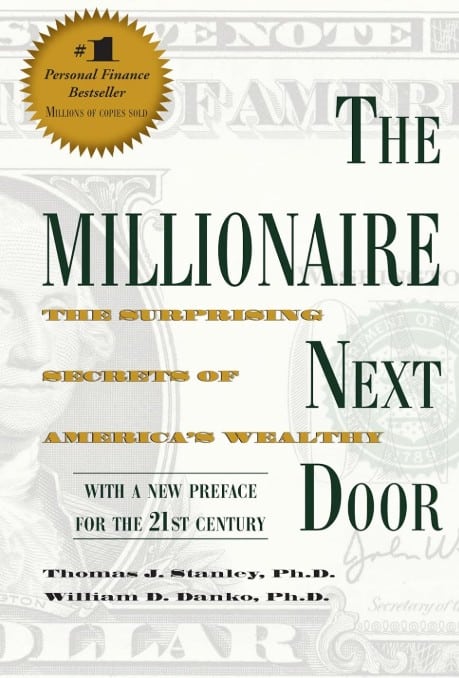
The Millionaire Next Door argues that most real American millionaires look nothing like the media stereotype. They rarely live in mansions, drive exotic cars, or chase status. Instead, they quietly accumulate wealth by living below their means, budgeting carefully, and prioritizing net worth over appearance. Wealth is framed not as high income, but as assets minus liabilities, built over time through discipline.
Stanley and Danko introduce a core distinction: Prodigious Accumulators of Wealth (PAWs) versus Under Accumulators of Wealth (UAWs). PAWs save and invest a large share of their income, set clear goals, and keep consumption in check. UAWs, by contrast, spend heavily, chase lifestyle upgrades, and often have little to show on their balance sheet despite high salaries. A simple rule of thumb, Age × Pre-tax Income ÷ 10, is used to estimate how much wealth someone “should” have; those well above are PAWs, those well below are UAWs.
The book shows that frugality, planning, and time management are the real engines of wealth. Millionaires track their expenses, plan their financial future, and spend more time on investing, tax strategy, and business development than on shopping or leisure consumption. They avoid status-driven spending, especially on cars and homes that strain cash flow. Housing and vehicles are treated as tools, not trophies.
Family behavior becomes a major theme. Many wealthy parents unintentionally cripple their children’s financial independence through constant gifts and subsidies, which the authors call Economic Outpatient Care. This support often produces high-spending, low-saving adult children. By contrast, families that pass on values like discipline, work ethic, and self-reliance tend to produce children who become PAWs themselves. Career choice also matters: many millionaires are entrepreneurs or self-employed professionals in unglamorous but profitable niches that serve real needs.
Overall, The Millionaire Next Door reframes wealth as a lifestyle and value system that any disciplined household can adopt. The core message is simple: live well below your means, invest the difference, avoid entitlement and showmanship, and build a life around independence rather than image.