

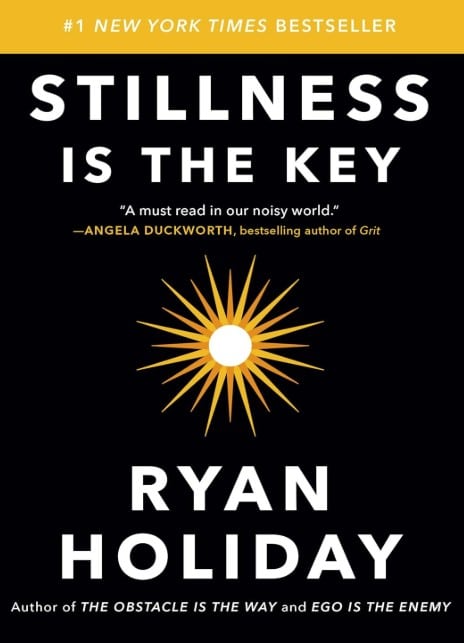
Ryan Holiday’s Stillness Is the Key argues that genuine peace and clear judgment come from cultivating stillness across three domains of life: the mind, the spirit, and the body. He explains that modern life surrounds people with constant noise, impulses, and demands that push them toward reactivity instead of reflection. Stillness, in Holiday’s view, is not about withdrawal or passivity. It is the disciplined creation of inner space that allows individuals to see the world as it really is and to act with intention rather than agitation.
Holiday shows that stillness begins with the mind. Limiting inputs, creating silence, and practicing presence allow people to think deeply instead of living on autopilot. He describes how historic figures such as Churchill, Tiger Woods, Anne Frank, and Marcus Aurelius used solitude, journaling, and reflection to sharpen perception and avoid being overwhelmed by emotion or urgency. Mental stillness is the work of clearing away distraction so that wisdom and clarity have room to emerge.
The book then moves to the spirit. Holiday explains that stillness at this level requires humility, grounded purpose, and the ability to accept reality without bitterness. People suffer more when they cling to what they cannot control. Stillness allows individuals to release ego, slow down emotional reactions, and anchor themselves to values and meaning. This spiritual steadiness creates resilience, especially in moments of pressure, loss, or uncertainty.
Holiday also argues that the body must support the pursuit of stillness. Rest, sleep, movement, diet, and physical maintenance are not optional. They are the foundation of a calm mind and a centered spirit. When the body is exhausted or overstimulated, mental clarity disappears. Physical discipline creates the conditions for emotional balance, patience, and thoughtful action.
Finally, the book emphasizes that stillness is sustained through routine. Clear rhythms, intentional boundaries, and simple daily practices help individuals return to stillness consistently. Holiday shows that structure frees the mind from chaos and protects attention from being hijacked by urgency. Over time, these habits make stillness a reliable part of everyday life rather than an occasional retreat.
At its core, Stillness Is the Key invites readers to live with greater awareness, discipline, and meaning. By quieting the mind, grounding the spirit, and strengthening the body, people can move through life with steadier judgment, deeper relationships, and a stronger inner peace that holds firm regardless of circumstances.