

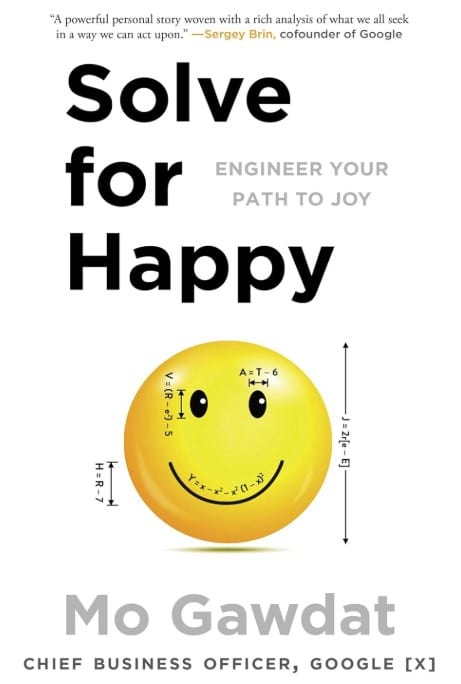
Gawdat introduces his central idea that happiness can be "engineered" rather than chased. He proposes the Happiness Equation: happiness is equal to or greater than the events of life minus expectations of how life should be. When reality meets or exceeds expectations, we feel content; when expectations are unrealistic, we suffer. The chapter sets the stage for treating happiness as a solvable problem, not a vague feeling.
Gawdat presents the 6-7-5 model: six illusions, seven blind spots, and five ultimate truths that shape our perception of reality. He argues that most unhappiness comes from distorted thinking, not from events themselves. By understanding how these illusions and blind spots operate, we can see where our minds mislead us. This framework becomes the mental map for the rest of the book.
This chapter explores the constant inner dialogue most people mistake for their true self. Gawdat explains that "the voice in your head" is a function of the brain, not your identity, and much of its commentary is inaccurate or unhelpful. Learning to observe thoughts instead of automatically believing them reduces anxiety and emotional reactivity. Creating distance from this voice is a core skill in "solving for happy."
Gawdat examines the illusion of self, showing how identity is often built from labels, roles, achievements, and stories. He suggests that our real essence is the awareness that notices these changing elements, not the elements themselves. When we stop clinging to a rigid self-image, we become more stable and less dependent on external validation. This shift in identity supports a deeper, more durable form of happiness.
Here he challenges the illusion of knowledge, the belief that we accurately understand reality. The brain takes shortcuts, fills gaps, and confuses familiarity with truth, which leads to overconfidence and conflict. Gawdat encourages intellectual humility, curiosity, and a willingness to question assumptions. Accepting that we may be wrong makes us more flexible, peaceful, and open to learning.
Gawdat unpacks the illusion of time, explaining how much suffering comes from living in the past or future instead of the present. Regret and worry are mental constructions, while real life is always happening now. By returning attention to the present moment, we reduce fear and increase appreciation. Practices like mindfulness and simple sensory awareness support this shift.
This chapter explains that the brain is wired for survival, not happiness. Its default mode is to look for problems, anticipate threats, and exaggerate dangers. Gawdat argues that we can acknowledge this wiring without letting it control us. Once we see that many "problems" are mental projections, we can correct our perception and suffer less.
Gawdat focuses on fear and the paralysis it creates. He shows how many fears are exaggerated or hypothetical and how they limit experience and joy. The chapter encourages taking action in spite of fear, using small experiments to build courage. Choosing movement over rumination helps restore a sense of agency and possibility.
This chapter gives a practical method for working with thoughts: question them. Gawdat suggests asking whether a thought is true, whether it is always true, and how life would feel without it. By testing thoughts instead of accepting them automatically, we can replace distorted beliefs with more accurate and helpful ones. This reduces unnecessary emotional pain.
Gawdat returns to the power of presence as a direct path to peace. He offers simple techniques to bring awareness back to the current moment, such as focusing on the breath, the body, or immediate surroundings. When attention is fully here, many worries lose their grip. Happiness becomes less about changing circumstances and more about how we relate to what is happening.
Happiness is described as a moving state rather than a permanent destination. Gawdat explains that emotions naturally swing between comfort and discomfort and that resistance to this swing intensifies suffering. Accepting emotional ups and downs as part of being human creates stability and perspective. Instead of chasing constant euphoria, we aim for a steady, resilient baseline.
This chapter centers on love as a primary source of lasting happiness. Gawdat emphasizes that happiness grows when we give love freely, without conditions or expectations. Love is framed not only as romantic or familial, but as compassion, kindness, and care for others and for life itself. When attention shifts from self-centered demands to genuine connection, joy deepens.
Solve for Happy offers a structured way to understand happiness as something already present rather than something we chase. Mo Gawdat argues that suffering arises when expectations conflict with reality, not from the events themselves. He uses his engineering background to show that happiness can be restored by removing distortions in our thinking. According to Gawdat, the mind creates unnecessary pain through illusions about control, time, identity, and knowledge. When these illusions are questioned, the mind becomes quieter and life becomes clearer.
A central idea in the book is that we are not the constant stream of thoughts running through our heads. Gawdat encourages readers to step back and observe thoughts instead of accepting them as truth. This creates distance from fear, worry, and self-criticism. Through this lens, the self is not a collection of roles, emotions, or accomplishments, but the awareness behind them. When we detach from the noise of the brain and stop believing every story it tells, happiness becomes more accessible.
Gawdat emphasizes presence, acceptance, and courage as practical paths toward well-being. Much unhappiness comes from the mind replaying the past or imagining the future, while the present moment holds far fewer problems. Accepting the reality of change, uncertainty, and loss allows us to move through life with less resistance. Fear becomes a signal to engage rather than withdraw. Expectations become something to examine rather than obey. By realigning our thinking with what is true rather than what we wish were true, we reduce suffering.
The book ultimately points to love, humility, and awareness as the most stable foundations for lasting happiness. Gawdat argues that unconditional love frees us from transactional thinking and keeps us grounded in what matters. His reflections on purpose and mortality highlight the importance of gratitude and connection. Solve for Happy blends personal insight with analytical clarity to show that happiness is not created by control or achievement, but by understanding the mind and choosing thoughts that support peace.