

Brooks explains that early-career strengths based on fluid intelligence fade earlier than most people expect. Many people resist this shift and experience frustration, fear, or denial. Accepting that decline is natural allows individuals to prepare for a more meaningful new phase of life rather than clinging to past performance.
He introduces the idea of a second curve built on crystallized intelligence, which grows with age and favors wisdom, teaching, and perspective. Transitioning to this curve means redefining success away from novelty and speed and toward depth, insight, and contribution. This shift opens the door to a more satisfying and sustainable life path.
Brooks describes success as something that can quietly become addictive, creating an identity tied to recognition and achievement. This often leads to workaholism, strained relationships, and unhealthy self-worth. Letting go of constant striving creates space for joy, balance, and a more grounded sense of identity.
This chapter focuses on reducing attachments that keep people stuck on the first curve. Brooks encourages removing unnecessary commitments, status symbols, and habits that no longer serve long-term well-being. Simplifying life makes room for clarity, intention, and a more fulfilling direction.
Brooks shows that contemplating mortality can sharpen priorities. Accepting that life is finite helps people invest in what truly matters, such as relationships, meaning, and purposeful work. Facing impermanence leads to wiser choices and reduces the fear that often surrounds major transitions.
Using the metaphor of aspens that share a single root system, Brooks emphasizes that relationships are the greatest source of long-term happiness. Strong friendships, community ties, and deep companionship provide resilience, especially as professional identities change. Connection, not achievement, becomes the foundation for fulfillment.
Brooks encourages nurturing reflection, contemplation, and inner development. Even those who have avoided spirituality earlier in life can benefit from practices that quiet the mind and deepen purpose. Spiritual grounding supports a healthy transition into the second curve.
Brooks reframes weakness and decline as opportunities for growth. Acknowledging vulnerability builds humility, connection, and self-awareness. Sharing weakness rather than hiding it strengthens relationships and allows new forms of strength to emerge.
Brooks concludes that change is constant and unavoidable. Peace comes from accepting transitions, releasing rigid identities, and focusing on wisdom, service, and love. The goal is not to prevent decline but to move forward with grace and intention.
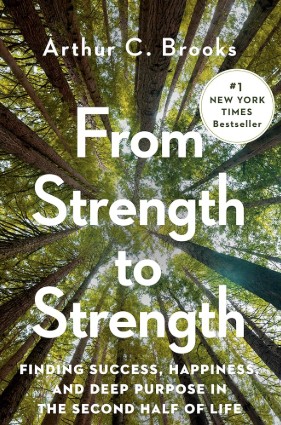
From Strength to Strength explains why high achievers often struggle when their early abilities begin to fade and how they can build a happier second half of life. Arthur Brooks starts by describing the “striver’s curse,” where people who once excelled fear decline and cling to their past strengths. He argues that this reaction is unnecessary because human intelligence changes over time. While fluid intelligence peaks early, crystallized intelligence rises later and supports careers based on wisdom, teaching, and guidance.
To benefit from this second curve, people must let go of a dependence on success and external validation. Brooks shows how attachments to status, work, and image can trap individuals in patterns that bring anxiety rather than satisfaction. Simplifying life, confronting mortality, and recognizing that time is limited help clarify what truly matters. He highlights that relationships are the strongest predictor of long-term happiness and encourages investing deeply in family, friends, and community.
Brooks also emphasizes the importance of spirituality and inner development, noting that reflection and gratitude help people navigate change with steadiness. He reframes weakness as a source of connection and growth rather than something to hide. The book ends by reminding readers that change is constant. Those who move gracefully into the next stage find purpose in service, wisdom, and love.