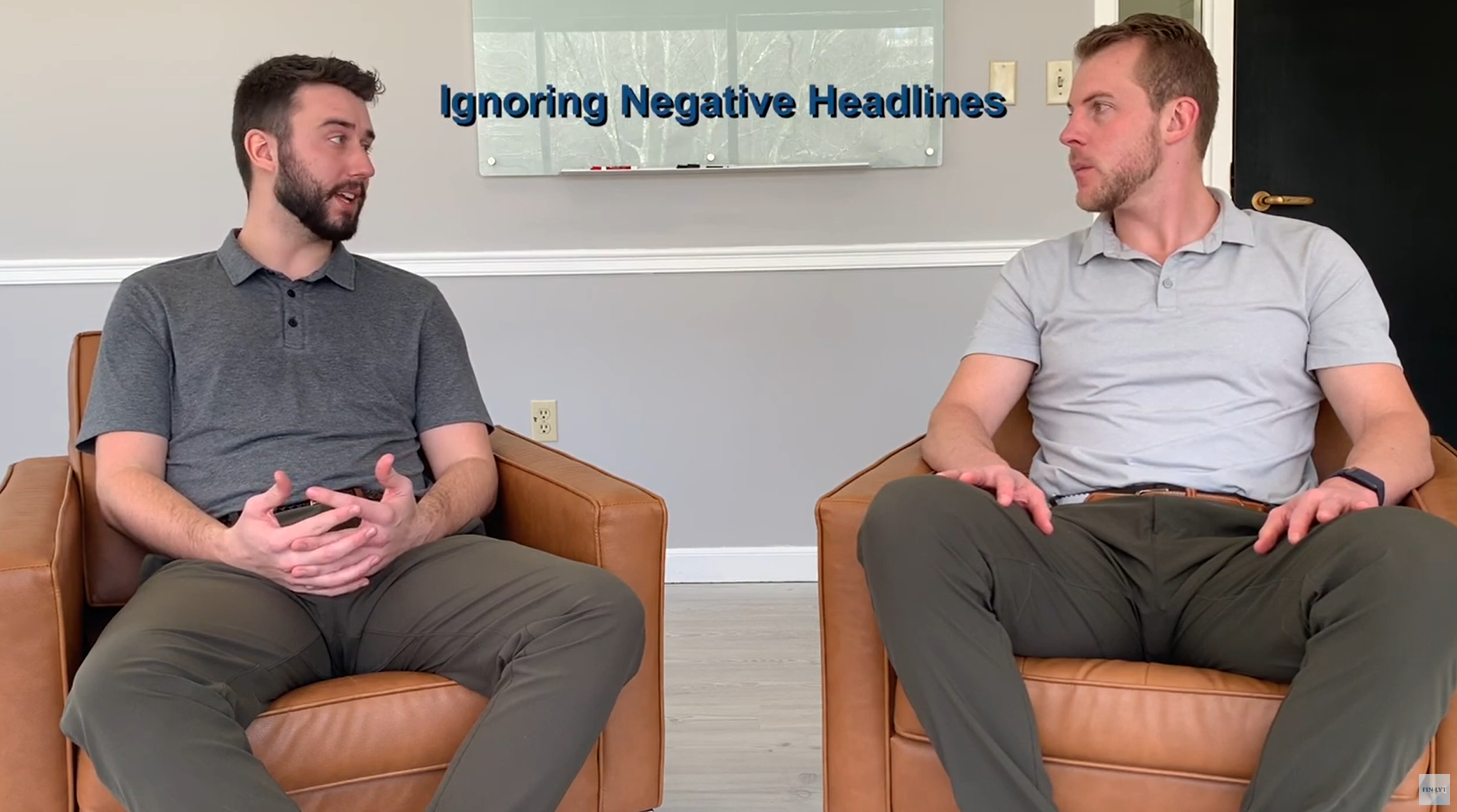

In this episode of EWA’s FIN-LYT Podcast, Matt Blocki and Jamison Smith break down a sophisticated tax strategy that EWA is implementing for a select group of high net worth clients: the long short direct indexing strategy. If you have a major liquidity event on the horizon, this episode could change how you think about taxes.
Most investors are familiar with traditional direct indexing, which allows you to own individual stocks, harvest losses along the way, and offset gains over time. The long short strategy takes that concept further by using leverage to go long on additional positions while simultaneously adding short positions. The result is the ability to capture tax losses on both sides of the market, whether stocks go up or down. Matt and Jamison walk through a real-world case study involving a $10 million investment, showing how after just a few years, a client could generate more in tax losses than the original amount invested.
This strategy is not for everyone. Matt and Jamison are direct about who it is designed for: clients with a significant capital gain event ahead of them, whether from selling a business, unwinding a concentrated stock position, or closing a large real estate transaction. They cover the mechanics of a 130/30 versus a 200/100 structure, what fees and leverage costs actually look like, where the strategy can go wrong, and why liquidity planning and exit strategy are just as important as entry.
If you are a high earner or business owner sitting on a concentrated position and looking for a smarter way to manage your tax exposure, this episode gives you the framework to understand whether the long short strategy deserves a place in your financial plan.
Like and subscribe to stay current on the strategies EWA is using to help clients build and protect wealth.
Speaker 1 – 00:00
We’re excited to talk about a new strategy that EWA is implementing called a long short.
Speaker 2 – 00:03
Normal direct indexing is what you would call a long short strategy. And so what long short is you’re using leverage
to go additional long position but you’re also adding in short positions.
Speaker 1 – 00:16
This is a pure tax play. Also the goal of being getting your index returns through stock position. So questions that
we’ve gotten, is this just for ultra wealthy clients? What happens if the market crashes? Can I get out if I change my
mind? It makes sense on purpose just to do a buy and hold index strategy, an actual ETF so you don’t have that risk
or have the same firm managing both to have the technology to talk to each other to make sure that you’re not
losing tax benefits. This is a highly sophisticated, complex strategy, can make a lot of sense I’d say for about 5% of
high net worth clients. This is not something you should get agree with if you think you’re going to need money
that should be invested in a separate way that’s actually liquid.
Speaker 1 – 00:56
This should be really long term wealth building, tax arbitrage, simple as that. Welcome everybody. Today we’re
excited to talk about a new strategy that EWA is implementing called a long short Tax aware investing, it’s a direct
indexing is something we’ve been doing for now three to four years and it’s been incredibly impactful, you know, for
clients. Instead of owning an index, you invest a million dollars, it rides up to 2 million, you sell it, you pay capital
gains on the difference between your basis and the gain of the 1 billion.
Speaker 1 – 01:30
Direct indexing allows you to own the individual stocks of the index or part of them tax loss harvest along the way
and so when you distribute over time, losses offset gains and you know the idea behind that would be your
distribution phase is a lot more tax efficient because those losses carry forward and offset the gains. And your
returns are staying similar within a a tracking error of generally 1 or 2% of the benchmark. And then ideally you
know the low basis stuff that’s left you pass to your kids, they get a step up in basis and then you know, they
repeat. So very sophisticated, very tax efficient strategy.
Speaker 1 – 02:08
And so long short is a way for certain individuals that have a little bit of a higher risk and complexity tolerance to
Meeting Title: EP 4 Long short strategy (For
Transcript).mp4
Meeting created at: 29th Jun, 2026 – 12:51 PM
1 / 14
offset you know, some anticipated gains that are coming up in the future. So a perfect candidate for this would be
someone that’s selling a business like an S Corp that a stock loss could offset the gain of their business. That
would be a no brainer. Other options, you know, if you’re selling a big real estate deal that you’ve depreciated over
time, it’s gonna have a huge capital gain. You could use this strategy to offset those taxes or just any kind of
private investment that would be, you know, short term or long term passive gain. We can use this strategy to
offset those taxes. So this is a pure, you know, tax play.
Speaker 1 – 02:57
Well also the goal of being getting your index returns through, you know, stock positions. But in this you’re actually
shorting mostly long and you’re also shorting some as well, which, you know, we’ll get into the weeds of that. So
Jameson in, you know, anything I missed? Just very high level, plain language. Anything you’d add before we get
into the nerdy details of this?
Speaker 2 – 03:21
Yeah, I’d say normal direct indexing is what you would call a long short strategy. So you’re buying long on individual
stocks, then you’re harvesting losses, so using leverage to go additional long position, but you’re also adding in
short positions. So essentially what you’re doing is in a long short portfolio, you’re capturing losses. When the
stocks go down with this, you’re capturing losses on both sides. So if it goes up, if stocks go up, the short
positions capture losses. If stocks go down, the long positions capture losses. You’re able to get the tax benefit on
both ends of it.
Speaker 1 – 03:59
Gotcha. Okay, well, yeah, so let’s go into, there’s obviously a couple, you know, let’s just give a case analysis.
Someone gives us $10 million. They are, they have stock in a privately held company that they think they’re going
to sell in the next two years. So they have $10 million of liquidity. They want to offset as much tax liability as they
can because the basis in that startup is very low. They have the option of doing, you know, a 130, 30 as an
example. There’s different there. You could, they do a 200, 100,.
Speaker 2 – 04:33
A little bit less, 300. You can really leverage it if you want.
Speaker 1 – 04:37
So what, yeah, so what does this mean and what are the mechanics of this?
Meeting Title: EP 4 Long short strategy (For
Transcript).mp4
Meeting created at: 29th Jun, 2026 – 12:51 PM
2 / 14
Speaker 2 – 04:40
Yeah, so basically it’s traditional direct indexing. You know, studies show that you’re getting about 2% tax alpha per
year. So you’re getting a little bit of a tax benefit and losses. This is kind of like putting that on steroids. So let’s say
someone has $10 million and we go 130, 30. So what that means is you’re going to use margin so you’re going to
borrow $3 million against that to buy additional long positions. So now on that $10 million account, you’re long 13
million with your 10 million that you put in. So you’re using margin. And while doing that, you also add in short
positions. And then again you can go up to 200, 300, depending on tolerance for margin. And there’s a margin
spread on the loan. But essentially you’re adding leverage onto the portfolio to then capture more losses.
Speaker 2 – 05:34
So how the tax benefits essentially would work is you could be in a position like these are real examples where
after a year you’ve $7 million of tax losses on that 10 million. Fast forward more. You can, you can have more tax
losses than what you actually put into the portfolio. So you put in 10 million. After a few years, you could have $12
million of losses. Now, there’s some caveats and things that really need to be considered for that, but that’s the
gist of it. You’re like just squeezing out all these losses that can then be used to offset. So in this example, let’s say
you put $10 million into it.
Speaker 2 – 06:14
Two years from now, you have 10 million of tax losses and you sell a business that has a $20 million gain, 10
million of that is now offset, and you’re short paying taxes on that difference.
Speaker 1 – 06:24
And that’s a great example too because the, so at some point you have to, you could have the tolerance to never
unwind this long, short, you know, position. But at some point you say, you know what, I don’t want to be long short
anymore. I just want traditional stocks, traditional ETFs that I’m investing. So, you know, ideal candidate, I would
say for this is someone like you said, has a 10 million sells business for 20. When that business sells, we’re great
home run. We just offset half of the capital gain exposure. But then with the rest of the money, you know, we can
go pay off the leverage on that portfolio and just go all along on that portfolio. If you have the cash to unwind.
Speaker 2 – 07:04
It, there has to be an exit strategy. And it’s pretty complex. So like you said, one way to do it is you sell your
business for 50 million and you have 15 million. Well, yeah, so you have a $15 million loan on the margin and you
use, you then use some of the business proceeds that you just got tax free, pay off that margin loan. That’s one
Meeting Title: EP 4 Long short strategy (For
Transcript).mp4
Meeting created at: 29th Jun, 2026 – 12:51 PM
3 / 14
way. You can also unwind it over like 10 years, let’s say, and do it tax Efficiently or some people would. There’s
another way you could say is I got all these tax benefits up front, I don’t really care, I’m just going to soak the tax
down the road. Or like you said, you could also just like leave it in there and let it ride out and then use that money
to pass it on to kids.
Speaker 2 – 07:50
So I would say like the caveat here is like view this money as it’s not liquid. It is liquid. You can get it out.
Speaker 1 – 07:57
But what you can unwind it. But going in to get the tax benefits, you’d end up giving away the tax benefits. If you
like snap a finger if.
Speaker 2 – 08:04
You have to sell the short positions, get taxed at short term capital gains immediately. So that’s just going to hit
your income. What I, what I’ve like to structure is like so one example would be if you’re in a, let’s say you’re at a,
you’re a key employee in a startup privately held company, then you have all of these, you have stock coming in,
maybe you’re an owner but, or your employee, you have like, you know, some sort of stock compensation that each
year as you sell there’s going to be a ton of capital gains. So like one use case would be let’s say we have $5
million. Let’s take a million and put it in traditional direct indexing or an ETF model or something that’s liquid that
we know you can pull from if you need it.
Speaker 2 – 08:47
And then let’s take the other 4 million and put it in a long short position. And we know, okay, I’m not touching this
for five to 10 years. That’s just the goal. We have our liquidity over here in this bucket. And now the long short’s
going to just harvest all the losses along the way to offset that stock that you’re paying capital gains on each year
as you sell out.
Speaker 1 – 09:04
The one thing to be careful if in that example if you do a million dollars and 4 million those you should have those
with the same advisor because they have to look at wash sales.
Speaker 2 – 09:13
Meeting Title: EP 4 Long short strategy (For
Transcript).mp4
Meeting created at: 29th Jun, 2026 – 12:51 PM
4 / 14
That’s really important.
Speaker 1 – 09:13
If one person, if the 1 million, you’re selling 100 grand of Apple here and then you’re trying to do something, if you
do that within 30 days you could lose the tax.
Speaker 2 – 09:21
It all has to talk to each other.
Speaker 1 – 09:23
Yeah. So for someone doing a long short sometimes it makes sense on purpose just to do a, you know, buy and
hold index strategy, an actual etf so you don’t have that Risk or have the same firm managing both to have the
technology to talk to each other to make sure that you’re not losing tax benefits as your tax loss. Harvesting on
your long and then doing the same on the long short because it’s you as your Social Security number one wrong
sale could wash the tax benefits if it’s done within that 30 day period.
Speaker 2 – 09:48
Yeah. So it’s, there’s some caveats. The easiest way to think about it like we said, is don’t touch the money for a
while until you have your liquidity elsewhere. Don’t lock everything up into these accounts. So there’s generally
pretty high minimums to do them. Normally 500,000 to a million bucks depending on the platform you use. So
we’re talking you got to put a substantial amount of money into this. And then let’s talk about the fees and the
margin cost as well. So are a little bit more expensive. Let me find, I do have a breakdown of estimated fees here.
Depending on the amount of leverage you put in. It’s going to be anywhere from we’ll say 20 to 150 basis points in.
Speaker 1 – 10:34
Cost because you’re borrowing on interest but you’re also getting that back.
Meeting Title: EP 4 Long short strategy (For
Transcript).mp4
Meeting created at: 29th Jun, 2026 – 12:51 PM
5 / 14
Speaker 2 – 10:39
Yep. Yeah, you explained that in.
Speaker 1 – 10:41
Well on the, you know, on the short position. So that’s why it narrows out when you think about like interest rates
are 4% five years ago, now they’re 7%. The cost for this actually stays the same. So the leverage cost we’ve seen
on a 1:30, 30 you’re going to pay it out 24, 25 basis points. On a 200, 100, you know, it gets higher. You’d pay 80
basis points, 0.8%. And then you’re also going to have a management fee. So like typically on a regular direct index
portfolio it’s going to between 20 and 40 basis points. If you do the 130, 30, you know, partners that we go through
for this, it’s 42 basis points and then on 200, 100 it’s 62 basis points. So the higher, the ratio of the long to short,
the more complexity and the higher the more.
Speaker 2 – 11:24
Leverage that you’re paying.
Speaker 1 – 11:26
Yeah. So for example, all in on a 13030 you’d be at 52 basis points between management fees, leverage cost, hard
to borrow cost and then incremental transaction cost and then on the 200162 basis points management fee, 80
basis points, leverage cost, hard to borrow, 3 incremental transaction cost estimated about 21 so that all in 143
basis points. Now on that 200, 100, you know, the alpha you’re getting could be up to what did you say?
Speaker 2 – 11:52
8, 7, 8%.
Speaker 1 – 11:53
So after you pay the 1.43, if it’s 8%, you’re still at about 6 and a half percent tax alpha.
Speaker 2 – 12:00
Meeting Title: EP 4 Long short strategy (For
Transcript).mp4
Meeting created at: 29th Jun, 2026 – 12:51 PM
6 / 14
Whereas traditional direct indexing would be like 1 to 2%.
Speaker 1 – 12:04
Yeah, but again you have to have something, this is not helping you with your W2 income and you have to have
something that you’re trying to negate in the future from a business sale, from a stock sale, something that, you
know, a real estate sale. This becomes a no brainer. But for, you know, regular investor, you have no gain you’re
trying to offset. This just doesn’t make sense because the tax alpha short comes into play when you’re trying to
sell something at a big gain.
Speaker 2 – 12:32
Yeah. And then one other one thing too is question. Everyone’s like is this more, is there more risk on an
investment standpoint? Like could I lose my shirt on, you know, the investment returns? And, and actually not really
because you’re hedging both sides of the.
Speaker 1 – 12:48
Market’s up, market down.
Speaker 2 – 12:49
Yeah. So you’re actually, it’s, I wouldn’t say it’s less risky but there’s, you might have a higher tracking error than you
would traditionally, but you’re kind of protected on both ends because you have long and short positions. So it is
very, from our research and the experts we’ve consulted with on this, like it is very unlikely that you get into a
position where you know, there’s a big margin call or your, you know, market crashes 50% and like portfolio gets
crushed. You never rebound because you’re kind of hedging both sides of the bet.
Speaker 1 – 13:24
Yeah. And so these like in a regular direct index portfolio, if you have just a stagnant million dollar portfolio, after
five or seven years it’s going to thin out as far as like do you have tax loss harvesting available. Available, there’s
short so many publicly traded stocks and the index that you’re trying to index and you know, long term you’re
hoping that the market’s going to double every, you know, seven to 10 years depending on the returns rule of 72.
And so you’re basically putting that process on steroids with this long short. And so you know, ideally you’re
Meeting Title: EP 4 Long short strategy (For
Transcript).mp4
Meeting created at: 29th Jun, 2026 – 12:51 PM
7 / 14
putting cash in, you’re putting more Cash in over time. So there’s always fresh capital to create more tax loss
harvesting opportunities. But this is not a forever strategy.
Speaker 1 – 14:06
I mean this is something you’re going to get index like returns, get a ton of tax loss services, offset something and
then some big gain and then hopefully have the cash to pay off the leverage, unwind the portfolio over time and
then the result is, you know, the result is you got returns that you would have, you know, maybe better, maybe a
little bit worse because there’s a tracking error. But we got substantial tax liability out of the way and then we
ended up, you know, after that period’s over back. As a traditional investor that would be the dream scenario and
the fit for someone that has this high liquidity event. We avoided the taxes. But then they also have the cash to
unwind it all cleanly over time and systematically. But yeah, I mean there can be.
Speaker 1 – 14:47
This is not something we recommend if you’re trying to avoid a little bit of tax, you know, just do regular direct
indexing 95% of clients. I’m going to say don’t. It’s going to make sense to do just long direct indexing 5% of the
clients. When you have a huge concentration, your net worth in one stock that’s at a big gain, a big business that
you’re trying to sell or a big real estate transaction. You have the liquidity and everything lines up. You have the
liquidity to invest now and you have going to have more liquidity to unwind it. This could be, you know, almost a no
brainer. But to hit all those boxes, it’s a very small percentage of the population.
Speaker 2 – 15:22
You have to be okay with a little bit of. This is complex like it’s, you gotta be. If you want the simplest solution out
there, this is not it. But if you’re okay with some complexity and getting a basic understanding of it and chasing
that tax benefit with the complexity, then do it.
Speaker 1 – 15:41
This is not a try to out. I mean there are you know, outperformance historically in some of these. But the reason for
this is not a get rich strategy. This is like let’s keep more of our money, let’s pay less tax strategy,.
Speaker 2 – 15:51
Track the index, get an index like return with the huge tax benefit.
Speaker 1 – 15:55
Meeting Title: EP 4 Long short strategy (For
Transcript).mp4
Meeting created at: 29th Jun, 2026 – 12:51 PM
8 / 14
Yep. Biggest mistake we’d see if someone, you’re going to need this money in the next five years, you’re going to
get this huge tax hypothetical benefit and then pay it all back if you need a liquidity event. So this is not something
you should get read with if you think you’re going to need money that should be invested in a separate way that’s
actually liquid. This would be, you know, really long term wealth building, tax arbitrage, simple as that.
Speaker 2 – 16:20
And the other thing, these are considered SMAs. So some direct indexing is I believe but like the way we do direct
indexing in house, it’s not an sma. We have the tech, the infrastructure to do it. This is what’s called a separately
managed account. And so certain platforms you do this on. So like for example right now you can’t, Fidelity doesn’t
allow this. You can do it at Charles Schwab, you can do it at some other interactive brokers. There’s different
custodians you could do it at. So that would be one downside. If you have everything at Fidelity and you’re like well
enough to open an account at Schwab to do this, obviously it could be worth it. Tax benefits are there.
Speaker 2 – 17:00
If you have a good balance sheet aggregator like we use E Money aggregate everything on there, you can see it
anyway, it’s not a big deal. But if you’re used to, hey, I short go to Fidelity to see everything, you’d have a separate
account at a different custodian. That’s one trade off, no question.
Speaker 1 – 17:14
Yeah. So let’s just go through a couple of pros and cons. So first pro tax alpha that compounds loss harvesting is
both up and down markets year after year, builds up stockpile of usable losses. What’s the next pro you’d say just.
Speaker 2 – 17:26
As a substantially better after tax return. Like we said traditional direct index, you make it 2%. This could be like 7
plus percent.
Speaker 1 – 17:35
Of annual tax off for concentrated stock. If you’ve got extremely concentrated stock you’re trying to build around
this is you’re not forcing a giant upfront gain realization. You can really offset that.
Meeting Title: EP 4 Long short strategy (For
Transcript).mp4
Meeting created at: 29th Jun, 2026 – 12:51 PM
9 / 14
Speaker 2 – 17:47
You’re basically having this work alongside it allow you to, you’re getting a bunch of losses to then help get out of
that concentrated position. The yeah, step up in basis still applies long position. So if you do leave it in there, pass
it on to kids. Step up in basis is a benefit and then it’s highly customizable.
Speaker 1 – 18:12
So for example, if someone has like a huge international exposure, we could just do the long short on the S&P 500.
We could also do it across several asset classes and diverse, you know, have it, you know, four different accounts
tracking large cap, mid cap, small cap and then maybe international developed a highly Customizable and that can
be based upon, you know, what else do you have going on? We have a client that has $5 million of Apple stock that
has a half million dollar basis in it. This is perfect because we can go start that there, leverage it, diversify all these
stocks around it, build up losses to then offset the gains as we sell Apple. And so long term you have, how do we
unwind this big thing without paying a tax? This could be the answer to some of those accounts.
Speaker 2 – 18:54
And in that example we could customize the investorship. So if you have this big Apple position, maybe when we
build the portfolio we say okay, let’s exclude tech or let’s exclude S&P 500 or whatever we want to do. Just not
heavily concentrated in one sector, no question.
Speaker 1 – 19:11
All right, so let’s talk about some cons. Obviously the biggest one is higher fees and cost drag. You know, roughly
50 basis points of additional costs and moderate leverage, more at higher leverage. Obviously the tax alpha can
offset that, but you know, nothing’s guaranteed.
Speaker 2 – 19:24
Yeah. So higher cost liquidity we talked about, that’s a downside. You know, can’t really just go access the money
complexity.
Speaker 1 – 19:31
There’s, there can be margin calls, short sale rules, wash sale rules. This is a heavily monitored strategy. Obviously
that’s why there’s a higher fee, you know, sophisticated client this, that has the boxes that we mentioned you need
Meeting Title: EP 4 Long short strategy (For
Transcript).mp4
Meeting created at: 29th Jun, 2026 – 12:51 PM
10 / 14
to check is very important. And there’s, we don’t recommend, never do something you don’t understand. So this is
going to be more of a, I think a, a longer startup process. And we found for clients to, you know, you gotta
understand what you’re getting into if you need to sell this. What are the ramifications and what’s the long term
goal with it? If we, how does this become an A plus strategy? It’s you know, time and a business sale and the
liquidity to pay to unwind it.
Speaker 2 – 20:11
So yeah, a couple more cons. So like we said, the short side gains are taxed at short term income. So that can be
super tax efficient. And then along lines of that there’s no step up on short positions, that’s short long positions. So
if you die and have short positions that you’re not getting the stubborn.
Speaker 1 – 20:30
Basis, this is fully liquid. You could put 10 million in the 130, 30 or 200, 100 the next month you could rip it out.
Right. But this is meant to be a minimum. We recommend five years, ideally 10 year strategy, meaning you’re
putting it in, you’re not going to need the money in at least five, ideally 10 years is we’re going to get the biggest
bang for your buck from a tax alpha perspective.
Speaker 2 – 20:55
And then the last con talk about margin cars a little bit. The where you would get where you could run into trouble
is if you’re, you have that one concentrated position that you use margin on and then it drops. Apple drops and that
drops.
Speaker 1 – 21:08
Yeah. And then so not that’s not going to be a big risk or a very small risk. If you’re Starting this with 10 million in
cash, this would be a risk. If you’re starting this with 5 million of Apple stock or of Apple stocks typically have been
pretty steady like of a more volatile stock that’s where you know you could have a margin call or you probably at
that point want to stick with like a 13030 or 145 versus a 200100 because that could, if you don’t have any other
liquidity to back up that margin call, that’s where you could run into some trouble as well.
Speaker 2 – 21:39
Yeah.
Meeting Title: EP 4 Long short strategy (For
Transcript).mp4
Meeting created at: 29th Jun, 2026 – 12:51 PM
11 / 14
Speaker 1 – 21:40
So okay, what’s so questions that we’ve gotten Jameson? The first question is like for people listening, is this just
for ultra wealthy clients or like what’s the cutoff here?
Speaker 2 – 21:50
I don’t know if I’d say ultra wealthy. It would be if you have enough money that you can put some here and keep
some liquid elsewhere and you have large, I guess technically higher income, high net worth but you have large
capital gains taxes that you’re trying to offset. That’s really the use case.
Speaker 1 – 22:10
Okay, second question. Is this risky?
Speaker 2 – 22:15
It’s more complex, it’s leveraged. Yes, it can be risky but you can keep market exposure in line with a benchmark
like you normally would. So you can, so really the risk.
Speaker 1 – 22:30
Is if everything goes wrong, you’re going to, your returns could be lower by the fees that you’re paying or if you’re in
a really tactical strategy where you’re, you know, you’re investing kind of more like instead of an index like an
actively managed mutual fund, you’re investing heavily in the financial sector versus energy sector. Just making
that example up, then you could have you know, higher risk and also much higher returns in the process. So with
that being said, what happens if the market crashes? Does that affect you any more than just a long short
portfolio?
Speaker 2 – 23:02
The longs go down but you can harvest losses there.
Speaker 1 – 23:06
Meeting Title: EP 4 Long short strategy (For
Transcript).mp4
Meeting created at: 29th Jun, 2026 – 12:51 PM
12 / 14
The shorts make money benefit you in.
Speaker 2 – 23:09
A crash and then there’s margin call risk if there’s again concentrated position or you have an extreme downturn
like the market went down 50% I guess but generally if you’re diversified and you can kind of head to.
Speaker 1 – 23:27
Okay, can I get out if I change my mind?
Speaker 2 – 23:30
Yeah, you can. Or just maybe.
Speaker 1 – 23:33
Yeah. Would you maybe if you unwind in six months have you’re paying a higher because you know you’re paying
the short term gains on the shorts and yeah. So again 5 to 10 year time horizon but worst case scenario stuff it’s a
fan. You can rip your money out net after paying taxes. Are there minimums?
Speaker 2 – 23:55
Yes, usually depending on the platform. Five hundred thousand or a million.
Speaker 1 – 23:58
Yeah, we’re typically not talking about this with I’d say like under 5 million would be a general recommendation cut
off. I would say the half million is if it’s a business owner that’s going to sell in five years and they’ve got cash flow
of like they’re investing a million a year from the profits to build this up. Yeah. Then you can start with a half a
million and you know don’t have to. Absolutely. But if it’s just like a stagnant I’m never going to contribute this again
probably you know recommending long short direct indexing versus and this is an artwork. We have to look at your
overall picture, your financial plan, your goals, levers that could go wrong or right. But you know just if I were to give
Meeting Title: EP 4 Long short strategy (For
Transcript).mp4
Meeting created at: 29th Jun, 2026 – 12:51 PM
13 / 14
like a general recommendation that would be it.
Speaker 2 – 24:40
Yeah. Probably want you know at least a million dollars by dealing a closer to five.
Speaker 1 – 24:44
Well this is a highly sophisticated, complex strategy. It can make a lot of sense I’d say for about 5% of high net
worth clients. If you have questions, please reach out. We’re excited to talk about. We’re going to be you know
bring this up if you’re a current client of EWA for several clients and you know recommending the majority of
clients stay put in long short direct indexing, you know given the nature of their financial plan and what they do. So
please reach out if you have questions.