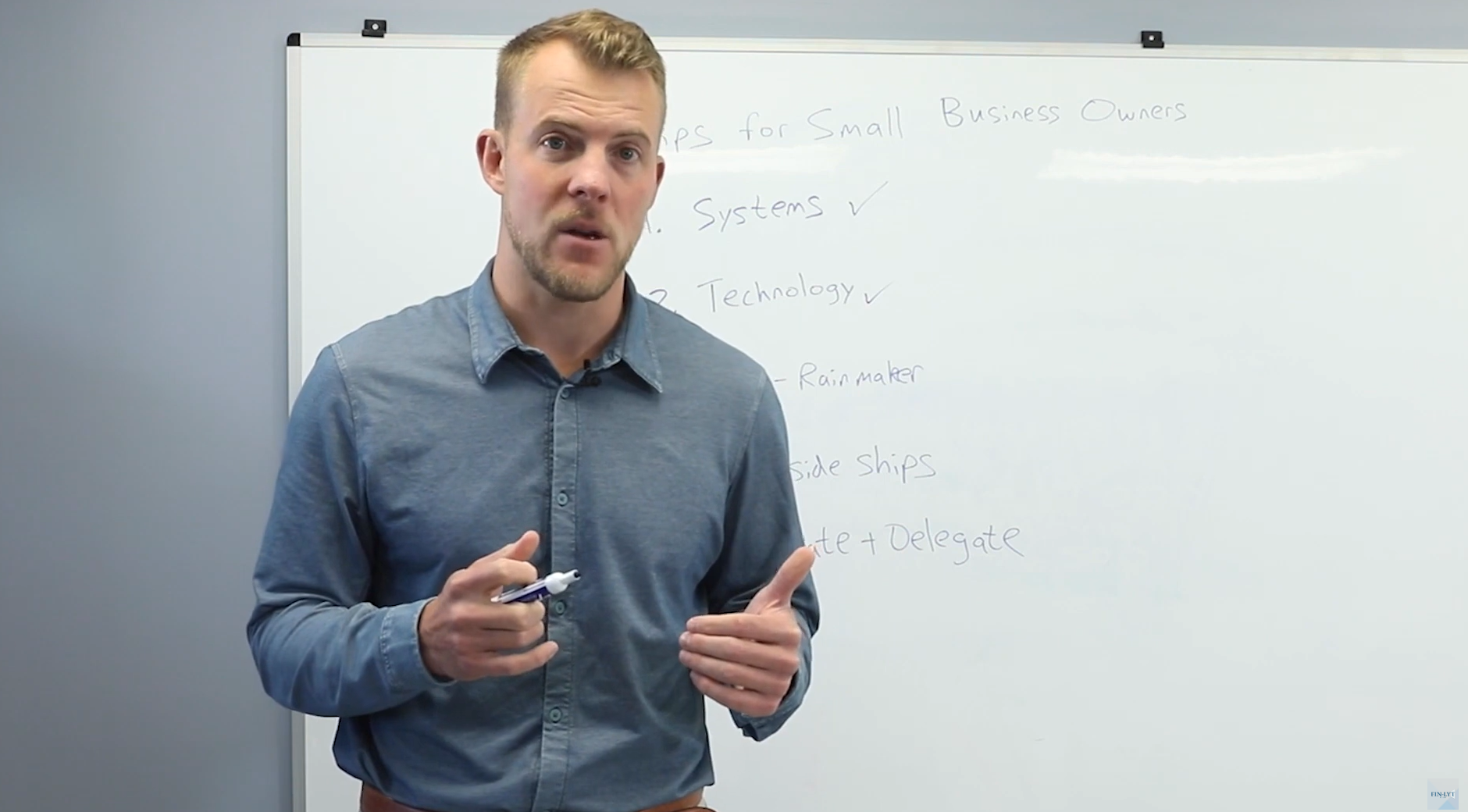

In this episode of EWA’s FIN-LYT Podcast, Matt Blocki and Chris Pavcic discuss a challenge many high income and high net worth individuals quietly face: financial chaos. Despite strong incomes or multi million dollar balance sheets, many successful professionals still deal with scattered accounts, tax surprises, conflicting advisor guidance, and constant decision fatigue around their finances. Instead of clarity, financial meetings often turn into housekeeping sessions focused on gathering statements and solving problems rather than actually planning for the future.
Matt and Chris walk through practical strategies they use to turn chaos into clarity. They discuss reverse budgeting systems that eliminate thousands of everyday financial decisions, automating tax withholding for variable income to avoid large surprises, and simplifying cash flow through structured accounts. The goal is to create systems that allow your finances to run efficiently in the background instead of constantly demanding attention.
The conversation also covers the importance of consolidating accounts and coordinating advisors under one strategy. When everything is visible in one place, it becomes easier to track net worth, manage cash flow, reduce risk, and make smarter decisions with confidence. Just as important, bringing both spouses into the planning process helps align priorities around lifestyle, family support, and long term legacy goals.
Ultimately, great financial planning is not just about investment performance or tax savings. It is about reducing stress, protecting your time, and creating a financial system that supports your life rather than complicating it.
Speaker 1 – 00:00
What we found is that typically high achievers have a lot of stress on their plates and a lot of times their financial
lives are the most chaotic ones. If everything’s chaotic, it’s like every financial planning meeting is like a crisis
meeting.
Speaker 2 – 00:13
A lot of the meetings turn into just like housekeeping, like getting balance sheet updates, getting updates from this
advisor, this accountant, whatever it is, that’s almost like a waste of everybody’s time.
Speaker 1 – 00:23
We saw these issues, that’s how we formulated our current structure at EWA is being able to do taxes, wealth
management, financial planning, estate plan, doing everything in one house and doing it on a high level. Now it’s all
automated and it’s all decision fatigue proof the end result doesn’t just look like lower fees, better returns, you
know, safe taxes, those are all important. But you get less anxiety, better sleep, stronger family relationships,
confidence during volatile market. When you add up your time, your clarity, peace of mind is one of the best
possible things you can do foreign. Most people assume high net worth, high income people, they have their act
together. What we found is that typically high achievers have a lot of stress on their plates, a lot of obligations and
a lot of times their financial lives are the most chaotic ones.
Speaker 1 – 01:14
So today we’re going to talk about strategies, how to turn chaos into clarity, how to organize financial life so it
actually your finances work for you and so you don’t feel like you have constant stress around your finances. Chris,
you know we’ve dealt with clients that have 10, 20, $30 million balance sheets and we typically our processes will
go if you kept everything as is. We want to show you how well you’re on track for your goals that you know, told us
are most important. And then we’ll typically do a second plan. And a lot of times we find that goals are, you know,
simplifying, you know, having less stress. So walk through some real life examples of what we’ve seen with these
big balance sheets or big incomes. You know, what are the biggest problems that we see?
Speaker 2 – 01:58
Yeah, I think if we start with just big incomes first, a lot of times there’s multiple sources. Maybe there’s base salary
coming in that could be W2 or maybe there’s K1 income and it’s different tax treatment. So oftentimes there’s a
good baseline that covers most expenses, but then variable income gets introduced, whether it’s from real estate,
bonus, whatever it is, and there’s just all of these dollars flowing into one account and everything gets co mingled
and a little bit messy. So I think that can be kind of the start of a lot of problems because a lot of these people see
a really big number come in. It feels like we can do pretty much.
Meeting Title: EP 03 Chaos to Clarity Organizing the
Financial Li…
Meeting created at: 4th Mar, 2026 – 10:12 AM
1 / 9
Speaker 1 – 02:35
We can, yeah, we can afford this or that.
Speaker 2 – 02:37
Yep.
Speaker 1 – 02:37
Yeah.
Speaker 2 – 02:37
Which is true. They can’t afford it. But oftentimes it’s just everything’s a priority. So I think a big part of our job is
helping them define what those priorities are and then coming up with a game plan on how to attack each.
Speaker 1 – 02:49
Yeah, and were looking to make one decision that eliminates thousands of decisions. So example of that would be,
you know, recently were working with a client that has, I don’t know, it’s like around one and a half million of
income, but basically like a million of it was run through a traditional payroll. And so the tax were being withhold.
Other half a million was through K1 1099, so no taxes being withheld. And before I started working with this, he’s
like, yeah, I already had this like huge like $250,000 tax surprise. And what had happened, there was two things.
One, on the million, there wasn’t the right tax withholding. So some of it was bonuses and they were withholding at
24 when they should have been at 37%. And then obviously the 500, the 1099, K1, there was no withholding.
Speaker 1 – 03:29
So what we’ve started to do with this now, new client, is two things. One, we’re looking at auditing on annual basis
what his tax liability is going to be. Not perfectly, but just high level ballpark. Right. So what happened before is
he’d have this huge tax surprise. His prior tax account would say, hey, you owe two or 300 grand. And he’s like, how
do I come up with this? And then it’s like, well, he makes a million. No, he can’t afford that. I mean, financial plan,
the money’s just going to leak away. And you know, usually the money’s not liquid unless you’ve got a good
financial plan. That was problem number one. Number two, he’s like, okay, let’s just do these safe harbors. Now
he’s handing this client homework.
Meeting Title: EP 03 Chaos to Clarity Organizing the
Financial Li…
Meeting created at: 4th Mar, 2026 – 10:12 AM
2 / 9
Speaker 1 – 04:05
We have to write this guy who’s in Pennsylvania, federal, state, local, tax, like these checks and manage every
quarter. So our recommendation was simple. Two things. One, we’ve set up a reverse budgeting system. You know,
two accounts, one fixed all your fixed costs and all your fixed savings. You can’t touch that account. It’s in and it’s
out. And this has got Everything on track. Mortgage payments, car payments, savings, you know, into brokerage
accounts, 5 to 9 for the kids, etc. And then the variable gets the rest. And that’s the swiping, you know, that can
fluctuate. He’s averaging like 20amonth, some months 10, some months 30, you know, the vacation months, but
average throughout the year. We did a past year over year, 20amonth. So now the one decision was agreeing to do
that. Now he’s eliminated thousands of digits. Can we afford this?
Speaker 1 – 04:48
Can we do this? Can we. Tracking this one bucket of money and tricking your mind to thinking you have enough
money when you don’t. Now he just has to track the one account where it’s like if it’s there, if it’s not. And so you
kind of, your mind gets used to this money temperature over time. We eliminated all the stuff that has to happen
and now it’s just the swiping that he has to him and his spouse have to track. So that’s number one. Number two is
what we did is we took all of the estimated income, the 500,000, we just increased his withholding on his paycheck
from a federal perspective. So, you know, ended up being, I think it was like, because we did, we also did a bunch of
stuff for the 1099.
Speaker 1 – 05:20
We did a second 401k and a cash balance plan rate to offset a lot of that income. So he’s like an extra like 150 of
tax. Now this guy, we did 12amonth extra of a federal withholding on the W2 side. So at the end of the year he’s
going to have no tax surprise whatsoever. It’s all automated. We’re going to pay a little bit more of a Pennsylvania
local tax, a little bit of interest on that. But who cares? I mean, guy this busy doesn’t need to be writing checks
every three months for a couple hundred dollars to local taxes. So now it’s all automated and it’s all decision
fatigue proof. This is just to talk about what you said, the high income, this is one part of the financial plan. High
income chaos.
Speaker 1 – 05:56
As far as like the financial planning aspect goes and like the savings aspect, how do we address that between, you
know, short term, midterm, long term, buckets, et cetera?
Speaker 2 – 06:05
Yeah, so first up, I think you mentioned it all the paycheck we recommended to route that to a money market
account with Fidelity, you know, who we use as the custodian. But so all the paycheck goes from base directly into
that money market. And then we looked at what’s fixed and variable and the budget sent that, you know, sent that
number back to the checking. So they got that money temperature set. And then given that his income was
sufficient to cover everything, as those bonuses and extra income flow in, that’s going to naturally accumulate a
surplus in the money market. So from there, usually it’s a quarterly decision. How much do we want to move to the
Meeting Title: EP 03 Chaos to Clarity Organizing the
Financial Li…
Meeting created at: 4th Mar, 2026 – 10:12 AM
3 / 9
brokerage? How much do we want to move to 529s and whatnot.
Speaker 2 – 06:41
So we have these targets addressed of we want to achieve this savings rate to get you to, you know, x amount of
dollars ten years from now. So it makes it really clean and easy because the money’s already there. It’s not like in a
checking account or spent already because we already fixed the budget. It’s all automated. And now all the
planning decisions can be coordinated from just one account versus maybe several checking accounts, savings
accounts, all these other buckets that now it’s just very clean.
Speaker 1 – 07:07
No question.
Speaker 2 – 07:07
Yeah.
Speaker 1 – 07:07
And again, that’s one decision. Automating lots of decisions. Like literally every day we make financial decisions.
And now it’s just, do I have enough all day you need to worry about, do I have enough money for the variable
account? 20amonth we average just checking that one account. And then, you know, obviously it’s a credit card
getting paid off that from that checking account. So, okay, let’s talk about now complex or chaotic balance sheet.
So maybe an older person that’s kind of accumulated all these private investments, Maybe they have three
different financial advisors, 50 accounts spread out everywhere. How often do we see this and then, you know,
how do we address it?
Speaker 2 – 07:37
Yeah, pretty frequently. And I think the big overarching thing more often than not is there’s one person that’s
controlling everything for the most part, and the other person isn’t really involved in the day to day or knows what’s
going on.
Speaker 1 – 07:49
Meeting Title: EP 03 Chaos to Clarity Organizing the
Financial Li…
Meeting created at: 4th Mar, 2026 – 10:12 AM
4 / 9
So it’s usually the husband that gets like the chaos and then it’s like the wife that gets involved that gets the. Helps
get the clarity part of it done. Not no generalizations, but if we’re to make one, that would be it.
Speaker 2 – 08:01
So the first step, I think is getting both people, if they’re married at the table and talking through it so that one we
can confirm that both goals align. Because as you know, a lot of times you’ll meet with one person says, oh, they
say we a lot and they talk about our goals and whatnot. But Then whenever we get both spouses to the table,
there’s conflict or disagreement, shouldn’t say conflict, that they have different perspectives on legacy, maybe on
whatever it is. So I think first thing is just getting everybody to the table so they know exactly what is really here so
that we can coordinate those decisions better. So I think that’s the case in a lot of.
Speaker 2 – 08:37
Not just high net worth, like we’re talking about deer, but certainly I think it’s more common with those balance
sheets that you’re saying like 10, 20 or 30, that one person’s usually taking the reins, the other person’s not
involved. So I think that getting just the alignment between both spouses is step number one, I think, to success, at
least what we’ve seen.
Speaker 1 – 08:56
No, no question. And then do you like from a multiple account standpoint, from a multiple advisor standpoint, from
multiple, you know, estate plan or cpa, what do you think will best serve a high net worth client? Like, what’s ideal
end result?
Speaker 2 – 09:13
Yeah, I think consolidation, Having as much, having as many decisions coordinated with one team as possible
goes such a long way. Because whether it’s income or net worth, if you break down the value of their time, a lot of
times it’s thousand, two thousand dollars an hour at this level. So saving their time and streamlining everything
goes so far. And then you get into the logistics and the technical side of it. Like if one person’s getting advice from
this portfolio manager, this accountant, maybe it’s not in alignment and they’re just getting just conflicting info. So
that can drag out decisions, years sometimes, and important decisions that need to be done timely.
Speaker 2 – 09:53
So just having a cohesive strategy with all of these different silos in the plan, whether it’s estate planning,
Meeting Title: EP 03 Chaos to Clarity Organizing the
Financial Li…
Meeting created at: 4th Mar, 2026 – 10:12 AM
5 / 9
investments, insurance, taxes, having all that coordinated with one group can go a long way to saving time and
making sure efficiencies are captured.
Speaker 1 – 10:05
Yeah, no question. I would add, you know, if you get to that end, ideal result. You mentioned you have one clear
financial picture. So you’ve got clear financial reporting. Everything’s visible in one place. No mystery accounts,
clear net worth, clear cash flow. A lot of people think I need money in different accounts to like diversify. The reality
is like a custodian like Fidelity or Schwab, I mean, you can keep half a million dollars spic guaranteed cash, you
know, and like a bank at 250 and Fidelity, it’s up to 1.9 because they’ve got extra insurance on top of just cash and
up to a billion dollars of securities under your name. So, you know, you have to think about cyber security
ramifications. And like, does spreading your money out in different banks, does that increase security or decrease?
Speaker 1 – 10:46
I’d argue it decreases security because the likelihood that you’re going to forget about something, you have more
account everywhere versus having everything centralized, it’s going to be much easier for you to monitor it. You
can put safeguards, you can lock the account so like, there’s no withdrawals or incoming if you think, you know,
you’ve been compromised in any way. So having everything in one place, as long as a good custodian actually de
risks you significantly. From what we’ve seen, there’s pros and cons. I’m saying in general, when you add up your
time, your clarity, peace of mind, consolidation is one of the best possible things you can do. I totally agree with
you.
Speaker 2 – 11:19
Yeah, I think, like, I can think of spreadsheets that we’ve put together of people. Whenever we meet with them for
the first time, it’s like 40 rows of different accounts. It’s mess. And a lot of times we’ll go through another meeting
or two and they’re like, oh, I have this other account that I totally forgot about. So it’s like they can’t even keep track
of it. So it’s. How are you supposed to have a strategy if you don’t even know where stuff is, how it’s invested? So I
think at that level, coordinating everything is just so important.
Speaker 1 – 11:46
Yeah, Once everything is coordinated, I think the. Yes, I think having defined roles, defined decision rights, you
know, who’s quarterbacking. And so that’s, you know, basically we saw these issues. That’s how we formulated our
current structure at AWA is being able to do taxes, wealth management, financial planning, estate plan, doing
everything in one house and doing it on a high level. So have different advisors, you’re going to get different
opinions. Someone’s going to be like a salesman, someone. And so you’re spending half the time just like,
debunking why this thing is the stupidest idea in the world and doing it on a professional level. But you’re going to
save so much time, so much stress by having everything, so much fees, by having everything under one roof. It’s
crazy.
Speaker 1 – 12:27
Meeting Title: EP 03 Chaos to Clarity Organizing the
Financial Li…
Meeting created at: 4th Mar, 2026 – 10:12 AM
6 / 9
And then you can also start involving your kids on a basis that you feel comfortable with to make sure their
education and financial literacy is at a high level versus it being, you know, spread out in an absolute chaotic
format. Let’s assume this is all done. What is the planning rhythm look like.
Speaker 2 – 12:43
After that’s really the heavy lifting is getting everything consolidated from there then we can get into our normal
cadence of State of the Union reviews, have the goals change. Checking in on priorities that we talked about
maybe a year or two years ago and just monitoring the ongoing situation. Like what do you want to do from here?
It just makes that whole process a lot cleaner versus whenever stuff spread out. A lot of the meetings turn into just
like housekeeping, like getting balance sheet updates, getting updates from this advisor, this accountant, whatever
it is. That’s almost like a waste of everybody’s time rather than focusing on what we’re actually hired to do for
them. Develop, plan and you know, work towards the goals. So a lot of times we’re just spinning wheels and
wasting everybody’s time by getting information and running around.
Speaker 1 – 13:26
Yeah, I mean, if you’re a vine, just talking about like how real estate perform versus like what AI stock. I mean that’s
not a financial plan that’s going to lead to dopamine and like trying to do different investments. And like once you
have a centralized financial plan in place, clients can call you for anything. And you’re going to help them, you
know, make good decisions based upon their consolidated funding and easily be able to show them what the
effect is if they’re doing a private investment or if they’re wanted to buy a vacation house. It makes everything flow
so much easier. Having all their tax information in house and you knowing there’s no cash flow surprises, that is
huge. And so your financial planning can become much more, you know, like you said, a regular cadence versus
like, you know, if everything’s chaotic.
Speaker 1 – 14:07
It’s like every financial planning meeting is like a crisis meeting. Like we owe this.
Speaker 2 – 14:11
What do we do?
Speaker 1 – 14:12
What do we do? And it’s like if you have something consolidated clarified, you know, out of that chaotic spiral into
like a simplified format, there’s no crisis meetings anymore. You’ve got peace of mind back on your plate, lower
stress levels. And now you’re making decisions from a place of joy and abundance, not out of fear or scarcity,
which is a huge shift and chaos will keep you in that fear and scarcity mindset for good.
Meeting Title: EP 03 Chaos to Clarity Organizing the
Financial Li…
Meeting created at: 4th Mar, 2026 – 10:12 AM
7 / 9
Speaker 2 – 14:34
In a lot of those situations, like it turns into us giving, like putting homework on these people’s plates. Because
then like pre meeting we’re like, can you please send us statements for this account, for this one. And then, I don’t
know, we’re always asking them for something rather than focusing on like what we want to plan towards. So it’s
again, I, I know I mentioned it’s like wasting time, but a lot of it just turns into like herding cats kind of.
Speaker 1 – 14:57
Yeah.
Speaker 2 – 14:58
And spending time in the wrong areas.
Speaker 1 – 15:00
Yeah, yeah, absolutely. Okay. Well, I would say once, the other thing too, once you have this is, you know, have clear
priorities, you know, what is lifestyle, what’s family support, what’s your giving, what’s your legacy? There’s fewer
debates and more alignment, more expectations are explicit. And then I would say the end result doesn’t just look
like lower fees, better returns, you know, save taxes, those are all important. But you get less anxiety, better sleep,
stronger family relationships, confidence during volatile markets. I mean the list just goes on and on. And you can
focus on your life, not in your head. Like where does everything sit financially? Which is a huge shift as well. Once
you do have that clarity, for sure. Closing thoughts.
Speaker 1 – 15:39
Successful families don’t mean just like a high balance sheet means, you have, you know, low stress, extreme
clarity, you know, very little confusion about your finances and a, a balance sheet that you don’t have any regret.
And that works for you under any kind of changing life circumstances, you know, pretty simple. And you save that
non renewal where we switch, which we always talk about your time, you’re never going to get that back. And the
more chaos, the more advisors, the more meetings. Your time leaks are incredible.
Speaker 2 – 16:04
You. Yeah, what’s the quote you said something about like water seeping in through cracks or something like that.
Meeting Title: EP 03 Chaos to Clarity Organizing the
Financial Li…
Meeting created at: 4th Mar, 2026 – 10:12 AM
8 / 9
Speaker 1 – 16:10
Yeah. I think the universe in general, like, you know, doesn’t like open space. So if you think about where dirt and
water, it kind of goes into cracks and you think about time is the same way. You gotta call a shotgun on your time
and be intentional about it. You know, the great quote is don’t prioritize your schedule. Schedule your priorities.
Speaker 2 – 16:28
Nice.
Speaker 1 – 16:29
Yeah, Big mindset. Shift. All right, thanks for joining us everybody.