

Hill calls desire the starting point of all achievement. It must be a burning, definite, written goal backed by a clear timeline and daily visualization. Casual wishes do not create wealth. Only a focused, emotional desire, reinforced through repetition and clear planning, becomes strong enough to direct actions and habits toward success.
Faith is the mental state that turns desire into belief. Hill argues that repeated affirmations and visualization strengthen this belief until it feels inevitable. Faith reshapes the subconscious, builds confidence, and shields the individual from doubt. It creates the emotional foundation needed to pursue long-term goals despite obstacles.
Autosuggestion is the method of feeding the subconscious mind with deliberate thoughts. By repeating the written goal with emotion each day, the subconscious becomes conditioned to act in harmony with that goal. Hill teaches that what you consistently tell yourself determines what you eventually pursue, notice, and create.
General knowledge does not create wealth. Hill emphasizes the need for specialized knowledge that supports the chosen goal. This may come from study, experience, or collaboration with experts. Knowledge becomes powerful only when applied toward a definite plan. The wealth-builder continually updates, refines, and uses their knowledge to create value.
Imagination is the workshop where desire becomes action. Hill describes two forms: synthetic imagination, which rearranges existing ideas, and creative imagination, which generates new solutions and visions. Great fortunes often begin as imaginative ideas that grow through persistence and planning.
Desire must be converted into a plan of action. Hill urges readers to build a practical blueprint, gather a team of capable partners, review progress regularly, and persist through setbacks. This chapter also stresses leadership qualities such as decisiveness, cooperation, and responsibility, all essential for transforming plans into results.
Indecision is a major cause of failure. Hill found that successful people make decisions quickly and change them slowly. A clear purpose enables firm choices, while fear of judgment leads to hesitation. Wealth requires cutting off distractions, committing to the plan, and refusing to let outside opinions derail progress.
Persistence is the force that sustains action after excitement fades. Hill argues that many people stop just before success. Persistence is built through desire, habit, and belief. It keeps effort alive through adversity, economic downturns, or repeated setbacks, allowing compounding effort to work over time.
The Master Mind is the coordination of knowledge and effort between two or more people aligned toward a shared purpose. Hill claims such cooperation creates a form of collective energy that multiplies results. No major fortune is built alone. The right partners bring new perspectives, motivation, and specialized skills.
Hill explains that powerful internal drives, when disciplined and directed, become a source of creativity, leadership, and sustained achievement. Focused energy strengthens persistence and supports long-term success when aligned with clear goals
The subconscious mind records emotions, beliefs, and repeated thoughts. It influences decisions, habits, and creativity. Hill urges readers to guard their thoughts carefully, feeding the subconscious with positive emotion, clear goals, and faith. Fear and negativity weaken results. Repetition, visualization, and emotional intensity train the subconscious to support success.
Hill describes the brain as a transmitter and receiver of thought. Positive emotions improve creativity and clarity, while negative emotions cloud judgment. Surrounding yourself with constructive influences and maintaining mental discipline helps attract better ideas and opportunities.
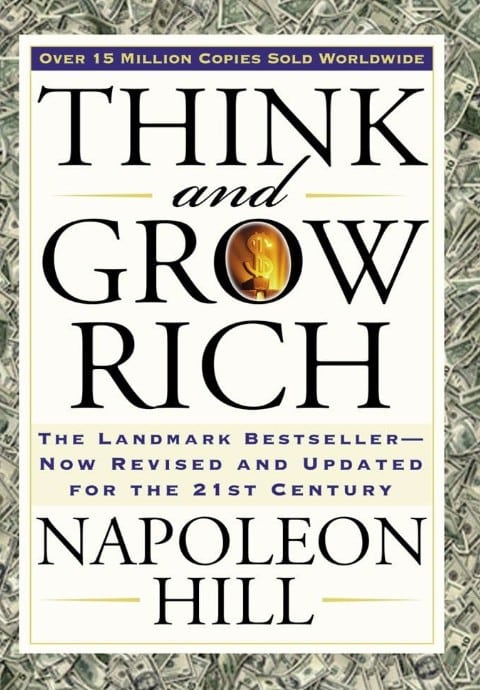
Think and Grow Rich is ultimately a book about the psychology of achievement. Hill argues that wealth is created first in the mind, long before it appears in a bank account. He explains that success begins with a burning desire and becomes real through belief, repetition, and persistence. The individual who learns to direct their thoughts deliberately gains access to deeper motivation, clearer goals, and greater resilience. Wealth, in Hill’s view, is a byproduct of mental discipline.
The book emphasizes that the subconscious mind drives behavior more than logic does. Hill focuses on training the mind through autosuggestion, visualization, and emotional reinforcement. This mental conditioning strengthens confidence and keeps attention anchored to the goal, even when circumstances are difficult. Imagination then serves as the workshop where desire becomes ideas, strategies, and innovation. The ability to think creatively, adjust plans, and act decisively determines how effectively ideas become results.
Hill also highlights the importance of environment and partnership. No one achieves great success alone. The Master Mind concept reflects the value of surrounding yourself with capable, aligned, and ambitious people. These relationships create new insights, higher standards, and shared momentum. At the same time, Hill stresses personal responsibility: persistence, decisiveness, continuous learning, and the willingness to revise strategy all remain essential.
Above all, the book teaches that fear, doubt, and indecision are the greatest enemies of achievement. When individuals replace fear with purpose, faith, and organized action, they access deeper creativity, stronger discipline, and long-term focus. Think and Grow Rich endures because it reframes wealth not as luck or talent but as a disciplined mental practice that channels desire, belief, and effort into lasting success.