

Attia explains that chronic diseases now dominate mortality, replacing the sudden infectious deaths of the past. These diseases build slowly over decades, which means prevention must start early. He introduces the concept of healthspan and argues that maintaining long-term function requires planning far ahead. The chapter reframes longevity as a lifelong project, not a late-life fix.
Attia contrasts reactive, symptom-based Medicine 2.0 with proactive, preventative Medicine 3.0. He argues that modern healthcare waits too long to act, allowing irreversible damage to accumulate. Medicine 3.0 focuses on early detection, personalized risk assessment, and long-term intervention. The goal is to delay or prevent chronic disease rather than treat it once advanced.
Longevity requires a clear objective, a strategy oriented toward reducing long-term disease risk, and tactics that translate strategy into consistent daily actions. Attia warns that most people fail because they start with tactics without defining what they want. He emphasizes alignment between goals and behavior. This framework becomes the structure for the book’s approach to long-term health.
Attia introduces the “centenarian decathlon,” a framework for envisioning the physical abilities you want to retain at an advanced age. He explains that maintaining these abilities requires building strength, stability, and endurance long before old age. Decline is not inevitable but reflects preparation. Training today determines independence decades from now.
This chapter examines caloric restriction, fasting, and metabolic flexibility as tools to improve longevity. Attia reviews how excess calorie intake accelerates aging and disease risk. He emphasizes personalization rather than rigid diets. The focus is on long-term sustainability and metabolic health, not short-lived diet trends.
Attia explains that human physiology evolved in an environment of scarcity, which clashes with today’s constant availability of calorie-dense foods. This mismatch fuels obesity, insulin resistance, and chronic inflammation. He argues that modern environments make unhealthy choices too easy. Effective solutions require redesigning habits and surroundings, not relying on willpower alone.
Heart disease is the leading cause of death, and it progresses silently over years. Attia describes how plaque forms and why traditional cholesterol tests often miss early risk. He highlights advanced lipid testing, especially ApoB, and emphasizes early, aggressive prevention. Cardiovascular health depends on consistent exercise, metabolic control, and proactive medical evaluation.
Attia explains how cancer develops from accumulated genetic mutations and cellular miscommunication. He outlines why early detection is crucial, yet complex. The chapter examines screening tools, risk factors, and lifestyle interventions that can delay cancer development. While not all cancers are preventable, risk can be meaningfully reduced.
Neurodegeneration begins decades before symptoms appear. Attia shows how factors such as sleep, metabolic health, blood pressure, and exercise influence long-term brain function. He argues that protecting cognitive health requires early, sustained attention. The chapter emphasizes delaying decline rather than waiting to treat it.
Attia argues that systems and habits are more effective than motivation alone. He encourages readers to create personal rules, schedules, and measurement tools that make healthy behavior automatic. The chapter emphasizes iteration, experimentation, and self-monitoring. Effective tactics support long-term strategy rather than relying on discipline alone.
Attia identifies exercise as the single most effective tool for extending healthspan. He outlines four key domains: aerobic capacity, VO2 max, strength, and stability. Each contributes uniquely to preventing disease and maintaining independence. Regular training dramatically reduces mortality across all major chronic conditions.
This chapter provides a practical structure for long-term exercise programming. Attia emphasizes progressive overload, recovery, and building a balanced routine that strengthens all major physical systems. He encourages training specifically for the functional tasks you want to perform in old age. Longevity requires consistency rather than intensity alone.
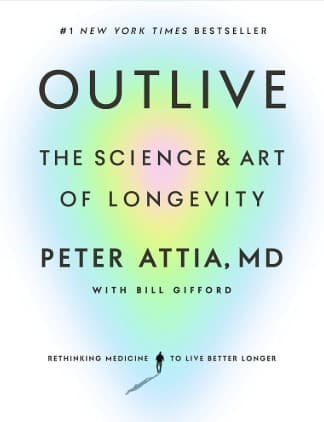
Outlive is Peter Attia’s blueprint for extending not only lifespan, but healthspan, the number of years lived with strength, clarity, and independence. He argues that modern medicine is still built for an earlier era, one dominated by acute infections and sudden deaths, while the real threat today comes from slow, chronic diseases such as heart disease, cancer, metabolic disorders, and neurodegeneration. To confront these “four horsemen,” Attia proposes Medicine 3.0, a proactive and personalized approach focused on early detection, prevention, and long-term risk reduction rather than late-stage treatment.
Central to his framework is the idea that longevity must be approached with clear objectives, thoughtful strategy, and consistent tactics. Exercise sits at the core as the most powerful longevity tool, combining aerobic training, VO2 max work, strength training, and stability to preserve capacity well into old age. Nutrition and metabolic health come next, with an emphasis on sustainable energy balance, minimizing ultra-processed foods, and supporting healthy insulin and glucose dynamics. Attia also stresses sleep as a non-negotiable pillar, showing how inadequate sleep undermines nearly every other aspect of health.
The book extends beyond the purely physical. Attia explains how brain health, emotional well-being, and relationships are integral to true longevity. Neurodegenerative disease must be addressed decades before symptoms, through lifestyle and risk management. Emotional health, including the willingness to confront past wounds and seek help, is presented as a critical determinant of how well and how fully a person can live. Throughout, Attia insists that no one can outsource this responsibility. Longevity is a long game that demands agency, self-education, and daily choices.
Ultimately, Outlive is less a promise of immortality than an argument for intentional living. By understanding how and why people most often die, and by aligning exercise, nutrition, sleep, emotional health, and medical care around those risks, individuals can meaningfully shift their health trajectory. The goal is not simply to add years to life, but to add life to years.