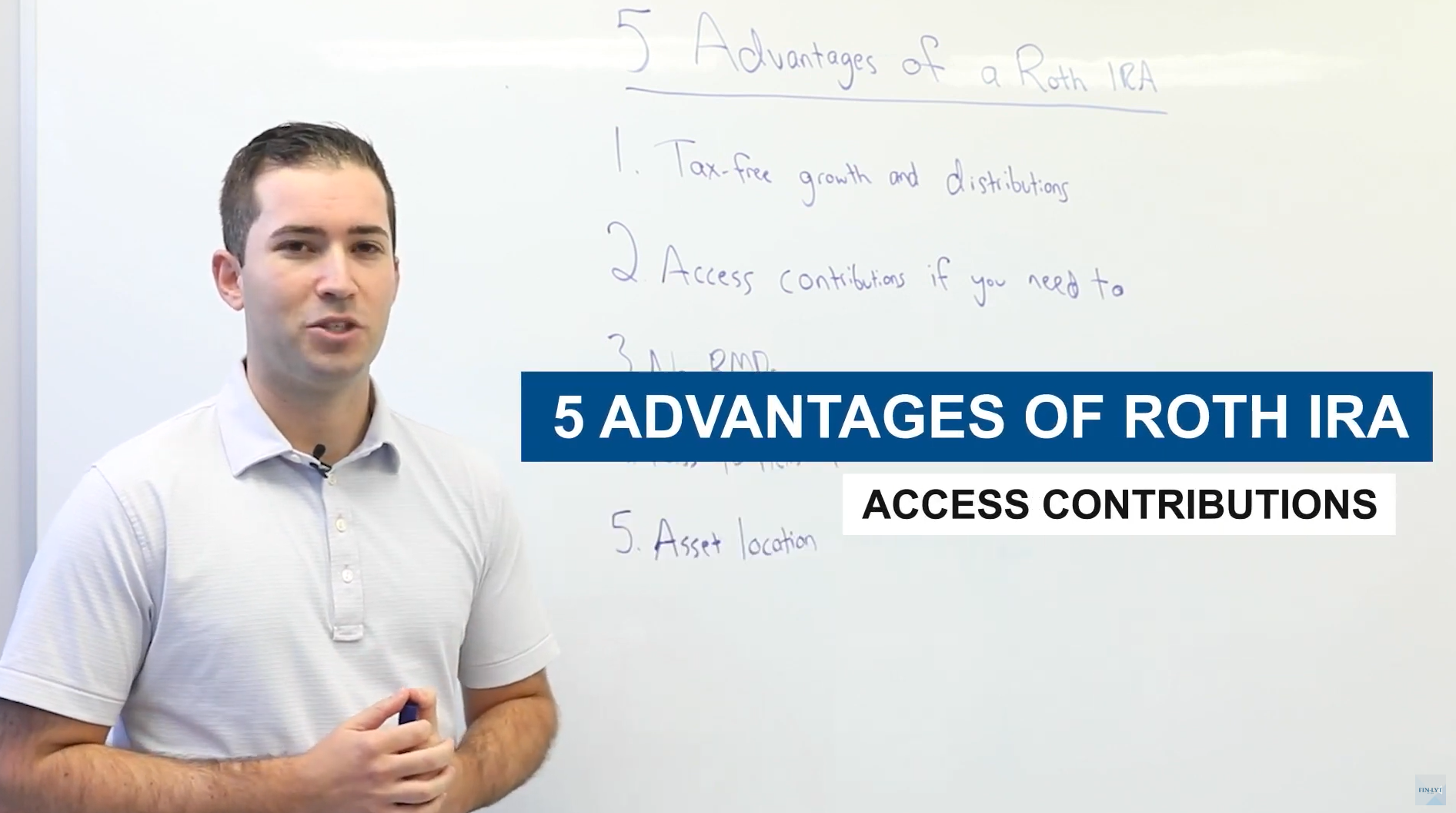

In this episode of EWA’s FIN LYT Podcast, Matt Blocki and Chris Pavcic walk through how life changes as income grows from one hundred thousand to five hundred thousand to one million per year and why higher income can actually create more financial danger if you are not intentional. They explain the idea of money temperature, how your lifestyle tends to rise to match your paycheck, and why building flexibility to buy back time and gain autonomy should be a core planning goal.
They start with the one hundred thousand level, where paying close attention to every dollar can be an advantage. Matt and Chris outline a simple order of savings decisions. First, capture the full company match in your retirement plan. Next, fund a Roth IRA for tax free growth and flexible access to contributions in a real emergency, then use extra cash flow to pay down higher interest debt or build a small brokerage or savings account. They describe reverse budgeting as making one decision about what goes where, then letting the system run so you can avoid constant expense tracking and still stay out of lifestyle creep.
At five hundred thousand of income and beyond, the math and the stakes change. Many families are now maxing out retirement plans, using tools like Roth strategies, health savings accounts, college savings, and large brokerage accounts that demand real discipline because they are easy to tap for lifestyle upgrades. Matt and Chris cover when to be cautious with deferred compensation plans, when advanced planning around insurance, asset protection, and estate documents becomes more important, and why they often recommend saving at least twenty five percent so future choices do not depend on one high stress job.
For those near or above one million in income, they highlight the sweet spot between saving and spending, where you live abundantly but with discretion, practice stealth wealth, and let your money serve your values instead of the other way around.
If you are in any of these income ranges and want help finding your own sweet spot, reach out to us and follow us on YouTube for more insights and information on financial topics.
Speaker 1 – 00:00
People, $100,000 a year, they’re in less of like a financial danger. If you’re at half a million, you’re most likely in a
very high stress career. And if you’re not thinking about it properly, you probably won’t have the flexibility to buy
back time and have autonomy.
Speaker 2 – 00:13
Whenever you get north of a million.
Speaker 1 – 00:15
If you’re not intentional about your decisions, it can get pretty tight pretty quickly and your money temperature can
get out of control.
Speaker 2 – 00:20
The thing that’s lost as income rises, it’s keeping that percentage of savings in line with the new income as it goes
up.
Speaker 1 – 00:27
Budgeting and tracking expenses, a waste of time. You’re not going to accomplish anything. You’re just going to
stress yourself out. And in the financial universe, like dollars that don’t have a job, they’re going to get spent. We’ve
seen a lot of clients in this situation helping them get out of it’s very fulfilling. But if you can stay out of it as you go,
it’s going to be much easier. So there’s a sweet spot here between saving and spending. And less than 10% of the
population is in that sweet spot. And so the sweet spot, I’m going to say.
Speaker 2 – 00:57
Foreign, The savings differences, if you’re making a hundred thousand per year, 500,000 per year, or 1 million per
year, are wildly different. So in this video we’re going to talk about different strategies that you can implement
based on whether you fall in these different income ranges.
Meeting Title: Episode 2 100k vs 500k vs 1 million
salary WIP5.mp…
Meeting created at: 19th Nov, 2025 – 11:39 AM
1 / 12
Speaker 1 – 01:16
So Chris, the interesting thing we talk about these ranges is the, I’d say in General, like people $100,000 a year, you
know, sometimes they’re in less of like a financial danger. And the reason I say that, as crazy as that sounds, is at
100,000 a year, people have to kind of have to watch every dollar. I think what you pay attention to, you can build a
strategy behind it. So if, you know, at 100,000 a year, let’s break it down. I mean you’re basically netting, if you get
your free 401k match, you’re putting on 6%. Let’s say a company matches 50%, so they match three, you want to do
that. It’s free money. You’re probably netting about 6,000amonth. Now, we’re assuming you’re in Pennsylvania,
you’re paying state tax, federal tax, Social Security tax, Medicare tax and local tax.
Speaker 1 – 01:57
So at 6,000amonth at this level, you know, you probably have fixed costs, rent, car payment, maybe some student
loans that are Eating up three credit card bills are two. You probably have a thousand a month left over after the
401k that you can start saving. And so if you’re used to leveling off of five and you’re young, you’re max, you’re
putting the 6%, getting 3% in your 401k. And let’s say with that thousand a month you max out a Roth IRA that’s
now like 583amonth you can put in there if you’re under 50. And then let’s say you start a small brokerage account
or you pay off extra on your debt, you’re going to be on track to replicate your money temperature by retirement.
Speaker 1 – 02:34
Now if we fast forward and we’ll go into detail, at a million and a million, you’re probably bringing home 50 to
52,000amonth. And it’s really easy to justify big house, several cars. And you know, even at 52, if you’re only saving
like 3 or 4,000amonth, you’re not gonna become close to replicating the net worth. You need to replicate that
lifestyle and you’re gonna be in a real danger zone. So what else? So at a hundred thousand dollars a year, after
you’ve maxed out your 401k, after you’ve maxed out, now explain why someone would definitely want to max out a
Roth ira.
Speaker 1 – 03:07
And then for most people it becomes the decision of do I pay down my debt or do I invest, do I pay the minimum
debt, do I pay extra on the debt or do I invest the money in a brokerage account or a savings account? So give us
the hierarchy of decisions of like what you must do and then what some of the forks in the road and how to
navigate that on a personal, you know, one by one basis.
Speaker 2 – 03:29
Yeah, the first no brainer is always contribute up to the match because if you’re not doing that, you’re leaving free
money on the table. So in your example you said if you give 6% and you get 3% back, you want to at least do 6% of
the 401k and then stop there. The next best bucket in our opinion to fund is a Roth ira. Reason being for that is
there’s a little bit more flexibility than a 401k plan. You can always take what’s called your basis or the money that
you put in can come out tax and penalty free if you truly needed to fall back on it in a real emergency instance. So
right now that Roth IRA limit 7,000 per year. So you put in the seven. You could always take it back out the growth.
Meeting Title: Episode 2 100k vs 500k vs 1 million
salary WIP5.mp…
Meeting created at: 19th Nov, 2025 – 11:39 AM
2 / 12
Speaker 2 – 04:06
If you take it out taxed and penalized, but you have that kind of emergency fund and if you wait till.
Speaker 1 – 04:12
60, then everything is tax free. The only other caveat, if you’re under 100,000, you can do a regular Roth IRA, which
makes the basis available anytime. If you’re over the limits and doing a backdoor Roth IRA and you have to wait
five years on the basis before you can get it out tax penalty free or tax free, you’d have to pay the 10% penalty on
your basis. But okay, so you’ve done the 6%, you’ve done the Roth IRA. Now let’s say you have an extra $500 a
month of freed up money. And this is assuming that you have your fixed bills, student loans, rent or mortgage, and
a car payment, and then your credit card, your swipe in money, your, we call it, you know, you got your fixed
expenses and your variable expenses. Your variable expenses we have in a separate checking account.
Speaker 1 – 04:50
Call this reverse budgeting. It’s 2,000amonth. So we have the extra 1,000amonth of free cash flow. The Roth’s
getting 583. So now we’ve got 417amonth. Are we paying off extra debt? Are we paying off the student loans
quicker? Are we building that up in a, a brokerage account or a savings account? What are we doing?
Speaker 2 – 05:06
Yeah, I guess it depends on the circumstances. Any money that you’re going to need in three, five years or so, like if
you’re saving for a down payment on a house, we wouldn’t recommend to invest that money. So I think it depends
on the circumstances of the person. But in general, it’s that first step, the match Roth ira. And then what are your
priorities? If you already own a house and you’re paying on a mortgage already, maybe, you know, you’re not
looking to save for something like that. So then the focus would be like, what’s your highest interest at? Should we
prioritize student loans? If you have them, or car note? Yeah, debt reduction at that point could make sense, but
depending if you’re saving for other goals. So we’d want to be mindful of that.
Speaker 1 – 05:43
Yeah, ways to get ahead. I mean, if you want to really hustle, I mean, live with a couple roommates, start a side
hustle, simple as that. You’ve lived with a couple roommates, you cut your expenses down in half. That’s going to
be especially young age Investing, you know, when you’re 25 versus waiting at 30, I mean it can be, you know,
millions of dollars of difference on the back end getting those early years done. And then side hustle, you can start
being super tax efficient. If you have 1099 income, you can set up a SEP IRA. You can deduct certain, you know,
things off of that mileage on a car, maybe a home office, etc. So if you want to get ahead those would be the two
simplest things. And then learn how to negotiate at your job.
Meeting Title: Episode 2 100k vs 500k vs 1 million
salary WIP5.mp…
Meeting created at: 19th Nov, 2025 – 11:39 AM
3 / 12
Speaker 1 – 06:19
At a hundred thousand, you’re probably a W2 employee somewhere. Gonna have to negotiate. Look at what is the
income I want in three to five years. Who makes that my company? What was. Ask them to be a mentor, ask them
how, what was their pathway? And then just write down pen to paper, what does the path look like and how do I do
that as quickly as possible. Simple as that. So let’s jump to 500,000. So real quick on the a hundred thousand, you
know, reverse budgeting is key. Make the one decision to set up the money and what’s going into each account
initially and then just, you know, just do it. Budgeting and tracking expense is a waste of time. You’re not going to
accomplish anything. You’re just going to stress yourself out.
Speaker 1 – 06:55
Make the one decision you call shotgun on the philosophy and then just force yourself into a system that you have
to follow it. Simple as that. And then avoid lifestyle creep. Do the opposite of lifestyle creep. Like, you know, make
some tough decisions in the early years to set the tone for the rest of your life. Because the flexibility that you have
later is going to be, absolutely, is going to be crucial. Okay, so $500,000. Break down the math approximately.
Chris, you know, what are we taking home on a monthly basis? What are the main differences? And then what is
the investment strategy look like?
Speaker 2 – 07:22
Yeah, so at 500 in this example, we’re going to stick with PA because that’s where we’re at. But this income range,
most people are maxing out the 401k. They’re not just going up to the match. So they’re doing the full 23,500. Or if
you’re over 50, it’s 31. But let’s just assume it’s the normal 23,5.
Speaker 1 – 07:39
And if they’re doing the mega backdoor off, they’re going to company match, let’s say an extra 15. They could be
throwing another 20 to 40 a year because the 415’s way higher.
Speaker 2 – 07:48
Yeah.
Speaker 1 – 07:49
So let’s just give it a range. You’re probably taking home 25 to 28amonth.
Meeting Title: Episode 2 100k vs 500k vs 1 million
salary WIP5.mp…
Meeting created at: 19th Nov, 2025 – 11:39 AM
4 / 12
Speaker 2 – 07:53
Yeah. Right.
Speaker 1 – 07:54
Depending on the mega backdoor off aspect of it.
Speaker 2 – 07:56
And I think the thing that’s lost as income rises, especially with people that are on like a track career wise, if you’re
gonna start out at 100 or and creep up to 500 or so, it’s keeping that percentage of savings in line with the new
income as it goes up. Because to your point, it’s harder to get into trouble at a hundred thousand because you’re
doing the, like the first steps are kind of that percentage. If you’re doing 6% and 3% and doing the Roth IRA, you’re
already at 15%. Right. Of your income is being saved every year.
Speaker 1 – 08:29
Yeah.
Speaker 2 – 08:30
So if you’re, if you just stick with that and you’re making 500,000 now that percentage is weighed, you know, it’s.
Speaker 1 – 08:34
Like, you know it drops to 5% if that’s all you do. Yeah.
Speaker 2 – 08:37
Meeting Title: Episode 2 100k vs 500k vs 1 million
salary WIP5.mp…
Meeting created at: 19th Nov, 2025 – 11:39 AM
5 / 12
So that’s not going to be nearly enough to build a bucket later in life that can sustain that same 25 per month that
you’re used to having your whole life. Pretty much, yes.
Speaker 1 – 08:46
The extra tax deferred accounts we want to max out right off the bat before we consider that if you have kids, you
know, 5, 29 plans at least we recommend half the money that you want to have towards college. You want to find
100 of it, analyze what’s 50 of it’s going to cost in future dollars. Let’s make sure 50 to that 529. The other 50 we
want in that direct index brokerage account for flexibility of timing of the markets up or down while the kids are in
college. Under the flexibility of not taking money out of the loss, but also being super tax efficient. You don’t want
to max out a health savings account if you’re eligible, triple tax free and tax free growth tax free out if you use it for
healthcare related expenses.
Speaker 1 – 09:19
And then this is really the real difference is someone at a hundred thousand, if they stay there their whole life, the
majority of their net worth is going to be probably in their 401k Roth IRA and in their house at 500,000. Over half
their net worth will end up in a brokerage account. Because to get to that savings account maybe 5 to 7% is
through the traditional Roth IRA, mega backdoor, Roth HSA. The other to get on track to replicate that money
temperature they’re used to it’s going to be in a brokerage account. That takes a lot of discipline because a
brokerage account you can access at any time and typically we’ve seen with most families it gets rated for the new
furniture, the new house, the vacation house.
Speaker 1 – 09:54
So you got to set a minimum amount where, okay, here’s when we want to be financially independent. The other
thing I’m going to say too is if you’re at half a million, you’re most likely in a very high stress career. And if you’re
not thinking about it properly, you probably won’t have the flexibility to buy back to time and have autonomy and
not retire at 50 but have the flexibility to transition into something less stressful or that you can control your time
better by your 50. So it’s that artwork again of financial planning of not just plugging in like a online calculator,
when to retire at 65. It’s like, okay, what if I want to have many sabbaticals or many retirements? Let’s load that
brokerage account up.
Speaker 1 – 10:31
First of all, that controls your money temperature because if you don’t save it’s going to get spent. Let’s face it, if
you’re saving five a month, bringing home 25, those 20amonth is going to seep out. The universe hates like cracks.
The dirt fills in the cracks in the financial universe. Like dollars that don’t have a job, they’re going to get spent,
right? And everyone can relate to that. So you got to call shotgun and pay yourself first and save first and make
sure that like you said, the percentage is aligned. So if you do that properly, you’re just going to have a giant
brokerage account at this kind of income level. And Ideally you use ETFs or better yet, you direct index with
technology and, and a team that can do this with a manpower that’s looking at it.
Speaker 1 – 11:09
Meeting Title: Episode 2 100k vs 500k vs 1 million
salary WIP5.mp…
Meeting created at: 19th Nov, 2025 – 11:39 AM
6 / 12
You can do this with much, you know, you don’t need a million dollars. You can start with a hundred and then start
dollar cost averaging to, which works great when you’re purchasing individual stocks and you erase the internal
cost of them and you control the tax liability of it as well. Anything else to add? I mean we can go into more
advanced topics now, Chris, but what talk about donor advice funds, charitable bunching. Let’s talk about, do we
do deferred compensation plans if we’re talking to a doctor and they have a 457, right? Not a, not a governmental
plan, a non governmental plan. What does their estate plan look like what are some of the major differences in
these subjects that you would see? Half a million versus the a hundred thousand level. Yeah.
Speaker 2 – 11:43
So there’s definitely more complexity introduced just because you, like you said with the hundred, that complexity
isn’t added in because you’re not maxing out those accounts yet. But once you get over those thresholds, there’s
only so much that can go into these qualified plans. So like the brokerage account introduces a lot of discipline,
but there’s also going to be other avenues like the 457. We can start there. Those plans look attractive on the
surface, but oftentimes if you dig into them, they’re a little bit restrictive. Because a 401k, it’s your own account, it’s
protected. There’s different, like IRS rules that make it yours. A deferred compensation plan is your employer’s
promise to pay you in the future.
Speaker 1 – 12:22
Yep.
Speaker 2 – 12:22
So it’s not like you have a, you know, you’ll see an account whenever you log into it. But technically if you look at
the, like the priority order on the employer’s balance sheet, 401ks are completely protected. Then if something
does happen to your employer, if it goes under bought out.
Speaker 1 – 12:37
Yeah. Wages are going to go.
Speaker 2 – 12:38
Yeah.
Speaker 1 – 12:39
Meeting Title: Episode 2 100k vs 500k vs 1 million
salary WIP5.mp…
Meeting created at: 19th Nov, 2025 – 11:39 AM
7 / 12
The forfeit was deferred wages.
Speaker 2 – 12:40
Yeah. So that’s higher on the liquidation order.
Speaker 1 – 12:43
Now governmental plan, for example, University of Texas, with a lot of doctors there, they, it’s a governmental plan
so it’s protected. So we recommend max it out, you’re good. But for a non governmental plan, like in Pittsburgh,
most of the hospitals have this, we recommend, well depending on the strength of the hospital. Even if the hospital
strength. Now if you leave, you can cash it, but we don’t want money stuck in a place that’s tied to a, the balance
sheet of, of an employer that’s already paying your paycheck.
Speaker 2 – 13:08
Yeah.
Speaker 1 – 13:09
So yeah, that’s generally one that we’d recommend to steer clear of. But the good news of it about is you can put it
through your paycheck, you’re not going to see it. That’s a good thing because a brokerage account comes in your
bank account, then it goes or if you’re smart, you set up your paycheck where it diverts, you know, part of the
money just goes straight to your brokerage account because you can have a routing account number associated
with like, you know, your Fidelity account. So you treat it just like the 401k. So I would agree completely with that
mindset.
Speaker 1 – 13:33
And then as far as like insurance reviews, estate planning, this is typically the level where we’re going to talk about,
you know, does permanent life insurance make sense on top of term life insurance with assuming we have
everything else maxed out, does it make sense to have an estate plan that revolves revocable trust, maybe even
spousal life access to type of irrevocable trust, looking at, you know, future net worth forecast and keeping some
flexibility and liquidity in mind as we go. So this is an exciting zone because you have a lot of optionality with
lifestyle, but it’s also a dangerous zone where it’s kind of like, oh, make a lot of money. We’re in the top, you know,
percentage of, you know, top 5% depending on your income of income.
Meeting Title: Episode 2 100k vs 500k vs 1 million
salary WIP5.mp…
Meeting created at: 19th Nov, 2025 – 11:39 AM
8 / 12
Speaker 1 – 14:11
And if you have the keeping up with the jones, if you’re not intentional about your decisions, it can get pretty tight
pretty quickly and your money temperature can get out of control. Where your plan’s way off track. Where it was on
track at a hundred. Now suddenly, if you don’t divert, you know, part of your raises into automatic savings, believe it
or not, the more money, the more off track you could be.
Speaker 2 – 14:28
Yeah, I was going to say, I think in doing this it’s kind of easier to get plans on track. The lower the income for sure.
Because whenever you get north of a million, like all those, like you said, a house, the cars like those come with
big. Usually they’re not purchased in cash and it’s a big item on the budget.
Speaker 1 – 14:46
Hidden cost involved too. You, maintenance, you know, all kinds of stuff that pops up.
Speaker 2 – 14:50
So you wake up and all of a sudden like 10 years ago, you were making it work on 15amonth. Now you’re at
50amonth, but your committed bills are like 35 or you know, we see it all the time where it’s harder to find and get
to that usually 15, 20, 30%. If you’re saving somewhere in that range, you’re going to be good.
Speaker 1 – 15:06
But.
Speaker 2 – 15:07
But it’s harder when your budget gets filled up with these commitments, whether they’re country clubs or houses,
whatever it is.
Speaker 1 – 15:13
Meeting Title: Episode 2 100k vs 500k vs 1 million
salary WIP5.mp…
Meeting created at: 19th Nov, 2025 – 11:39 AM
9 / 12
Yeah. And the, you know, those ranges you hear, if you’re saving 15% long term, I’m sure you’d be on track. But I
think today is just different. Right. So I’d recommend a minimum of 25% because there’s a lot of career paths that
are high stress. So we don’t see clients retiring at 65. Traditional. We see the most and the happiest People we see,
they can change pathways, they can change employers. They, and you do that with ultimately building flexibility
and you do that with high savings rates because more importantly than having the money there is just controlling
the money temperature along the way. So you’re not used to 80 or 90% of your paycheck.
Speaker 1 – 15:49
If you’re saving half your paycheck and you’re making a million, if you’re bringing in 50 and you’re saving 25 and
spending 25 and you hate your job, you can take a pay cut in half and still be happy and probably still be on track.
If, if you’re bumping up to 40,000amonth is on house one, house two and your kids are in private school and you
have this low delta of savings, you really don’t have flexibility. You’re going to be stuck in that job grinding and
doing whatever your employer says you have to do, working whatever hours your employer says you have to do.
And you’re just gonna have a lot of regret missing time with your kids and then you’re gonna, you know, you’re
probably at that point at 60, your kids are gone, you’re like, well now all I knew was work.
Speaker 1 – 16:26
And then we’ve seen a lot of clients in this situation, helping them get out of it’s very fulfilling. But if you can stay
out of it as you go, it’s going to be much easier. So a million dollars 53amonth is our analysis here. A net
approximately. And it’s the same thing we talked about with half a million. You’re maxing out your mega backdoor
Roths at this point. The, you know, trust LLCs, asset protection, but max out the 401k maxing out back to a Roth
max, you know, piling money into the 529 plans. Really having you know, probably 10 or 15amonth going in a
brokerage account at a minimum is going to be crucial to have that flexibility in your 50s where you can switch
careers and stay financially independent early because you thought 500,000 was stressful job in a million.
Speaker 1 – 17:11
I mean that’s an elite level. You’re in the 1% and the day to day grind, it’s very demanding of a high skill set to
depend on you. So asset protection, income protection, you know, protection for your family from a risk
management, life insurance, disability insurance, all of that stuff is just crucial at this level. Anything else you
would add from the stepping from the half a million to.
Speaker 2 – 17:30
A million, it’s just the building the muscle and Keeping that muscle maintained as your income goes up especially, I
think it’s more relevant with business owners that we work with, I think, because in the early years, maybe they’re
working and everything’s being reinvested into the business and they’re still saving a good amount relative to their
income. But then when the business scales now this big paycheck comes in and you have to be able to do
something with that and it has to go on the right accounts. Because if it’s great, if you’re doing all the retirement
plans and maxing that out like that’s step one, but that’s not going to help you make a pivot at age 50 or 45,
because none of that money can come out yet until you’re 59 and a half.
Meeting Title: Episode 2 100k vs 500k vs 1 million
salary WIP5.mp…
Meeting created at: 19th Nov, 2025 – 11:39 AM
10 / 12
Speaker 2 – 18:07
So it’s like at that range, it’s like, how do we build the muscle to get money into a brokerage account? Because
that’s where the freedom’s unlocked.
Speaker 1 – 18:17
No question. No question.
Speaker 2 – 18:19
But ultimately you have to save it.
Speaker 1 – 18:21
Yeah. I’d say money doesn’t change your values, it reveals them. Yeah. And it magnifies who you are on a different
level for good or for better. So having intentionality, having your values figured out, making sure your money’s
helping your purpose, your life by design is crucial because if you don’t do that, the world, especially on the social
media notification pushing world that we live in, it’s gonna call shotgun in some ways. We’ve seen it poison people
into the chase of the hedonic treadmill and getting more, accumulating more stuff. And then you wake up and it’s
like, I’m not even happy because I’m just doing everything that impress people or get other people’s admiration. I’m
not even living my life.
Speaker 1 – 18:57
So having those realizations before they happen, having the budget before that PayCheck goes from 100 to 500 is,
I want to say at 10x is the success rate of you staying not only just on track, but just happy. Because once you go
to a certain level lifestyle, it’s really almost not impossible, but really hard to go down from spending. I’m just
making this up 20 to 15amonth. It’s really easy to go from 15 back to up to 20. But once you’re at that level of
dopamine or brains, it’s really hard to go down from take the money temperature. It’s really easy to go up. So
before you go up and doing these audits and having a financial plan make sure. You know, the impact on today and
long term. And not to say, I think the opposite effect.
Speaker 1 – 19:40
If you’re just saving everything and you’re accumulating and you’re missing out on life, that’s a tragedy as well. So
there’s a sweet spot here between saving and spending. And very few people, less than 10% of the population
Meeting Title: Episode 2 100k vs 500k vs 1 million
salary WIP5.mp…
Meeting created at: 19th Nov, 2025 – 11:39 AM
11 / 12
would say right now is in that sweet spot. We see a lot of people overreaching over spending, even at 500amillion.
And we see a lot of people saving everything out of fear. And so the sweet spot, I’m going to say, is you’re living in
abundance with absolute diligence and with just, you know, having logical wisdom and having guides behind you.
So discretion.
Speaker 2 – 20:15
Yeah, I was going to say it’s.
Speaker 1 – 20:16
Abundance with an attention, with discretion. Meaning, oh, we’ll live abundantly. Buy this, Buy this. Well, no,
abundance with discretion. Like what is the, what is the result of my decision? Does it fit inside of the philosophy
that my family has, you know, that what we value, et cetera. But fear can lead to giant wealth creations, but can
also lead to relationships being ruined. Isolation. So an abundance mindset, but with discretion. And I’m going to
say the other key factor is stealth wealth. As you go from a hundred to 500, especially 500 million, you know,
flashing stuff around, people are going to hate you, people are going to be jealous. So doing stealth wealth, people
aren’t going to know what you make. People aren’t going to know how much money you have.
Speaker 1 – 21:00
That’s a really fun, happy place to because you’re not going to be isolated, you can spend well when you’re on
vacation, you’re not going to have stress and that’s a really tough balance to reach as we see people over correct
both ways over saving, you know, overspending. And that’s our job as ripping your uwa, is to help you hit that sweet
spot, be part of that 10% that’s got the right balance between these paradoxes that exist. But any closing
thoughts? No?
Speaker 2 – 21:25
Well said.
Speaker 1 – 21:25
Think you hit it all perfect. We’ll catch everyone next week and if you’re in these income ranges, happy to do a free
consultation with you and make sure that you’re in the sweet spot.